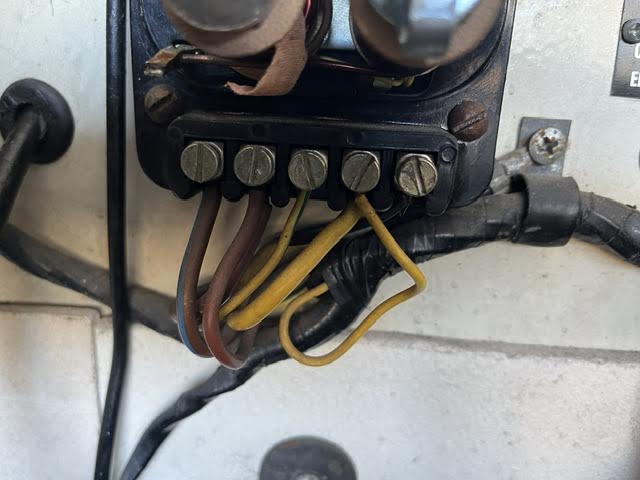
My '60 Healey BN7 fitted with a VDO voltmeter tended to show a charging rate above 15 volts at speed, prompting me to turn on the lights to lower that number. As I had a new voltage regulator (VR) on hand, I decided to install it. Unfortunately, the new one has spade connectors unlike the original, which has screws that clamp the wires. Having made the conversion, I started the car and found the VDO meter needle centered, showing no charge. After some rather cautious attempts to adjust the VR using information in the BMC Shop Manual were unsuccessful, I reinstalled the original VR. It also failed to show a charge upon startup. Understand that I had taken a cell phone photo of the original wiring connections and duplicated them. So why did a VR that had charged regularly for years, excessively perhaps, now not charge at all using the same wiring connections? I have verified those connections in a couple of places and will attempt to post a photo of the original VR with the connections that worked. Also, is there a practical manner to check whether a generator is charging using a multimeter? In case I can't post a photo, the wire connects, L-R, are (A1) Brown/Blue: (A) two Brown: (F) Yellow/Green: (D) two Yellow: (E) Black.


-
 Hey Guest!
British Car Forum has been supporting enthusiasts for over 25 years by providing a great place to share our love for British cars. You can support our efforts by upgrading your membership for less than the dues of most car clubs. There are some perks with a member upgrade!**Upgrade Now**
(PS: Upgraded members don't see this banner, nor will you see the Google ads that appear on the site.)
You are using an out of date browser. It may not display this or other websites correctly.
You should upgrade or use an alternative browser.
You should upgrade or use an alternative browser.
3000 Voltage Regulator
- Thread starter RDKeysor
- Start date


Offline
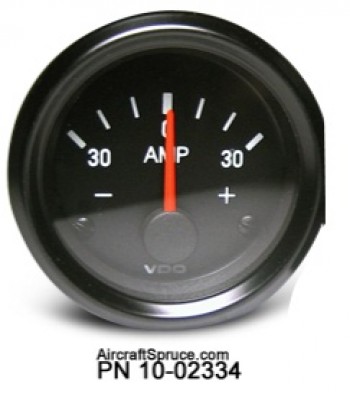
When you say "I started the car and found the VDO meter needle centered", does that mean you have a VDO ammeter that is centered? If so, what is the voltage?My '60 Healey BN7 fitted with a VDO voltmeter tended to show a charging rate above 15 volts at speed, prompting me to turn on the lights to lower that number. As I had a new voltage regulator (VR) on hand, I decided to install it. Unfortunately, the new one has spade connectors unlike the original, which has screws that clamp the wires. Having made the conversion, I started the car and found the VDO meter needle centered, showing no charge. After some rather cautious attempts to adjust the VR using information in the BMC Shop Manual were unsuccessful, I reinstalled the original VR. It also failed to show a charge upon startup. Understand that I had taken a cell phone photo of the original wiring connections and duplicated them. So why did a VR that had charged regularly for years, excessively perhaps, now not charge at all using the same wiring connections? I have verified those connections in a couple of places and will attempt to post a photo of the original VR with the connections that worked. Also, is there a practical manner to check whether a generator is charging using a multimeter? In case I can't post a photo, the wire connects, L-R, are (A1) Brown/Blue: (A) two Brown: (F) Yellow/Green: (D) two Yellow: (E) Black.View attachment 108684
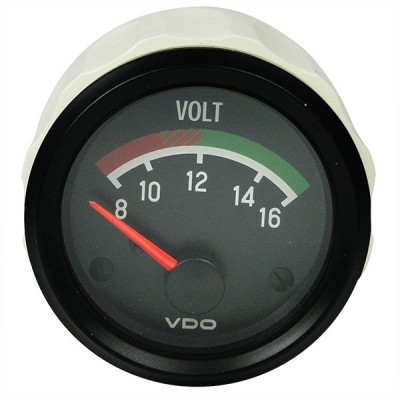
When the ignition is off, the needle rests at the left side of the dial. When activated, the needle centers pointing straight up. When the car is running and the system functioning, the needle will be to the right of the center, moving further to the right as the charging rate increases. I incorrectly referred to the VDO instrument as a voltmeter. I am told it is an ammeter. Thanks for responding.
Bill Young
Senior Member
Offline
Wouldn't this indicate that the system is charging?


Offline
A picture of the face would be helpful but it sounds and acts like an ammeter.
If so and it is directly wired to some +12VDC source without a shunt there is a real risk of shorting & fire were there to be contact between a + wire or terminal and a ground such as the dashboard, firewall, etc. A friend of mine has a 246 Dino and suffered a fire that burned up the entire harness and interior because of just such a short. This is why ammeters have largely been replaced by voltmeters, esp. with cars using alternators.
You can avoid carrying high current into the cockpit with a shunt or some similar device.
If so and it is directly wired to some +12VDC source without a shunt there is a real risk of shorting & fire were there to be contact between a + wire or terminal and a ground such as the dashboard, firewall, etc. A friend of mine has a 246 Dino and suffered a fire that burned up the entire harness and interior because of just such a short. This is why ammeters have largely been replaced by voltmeters, esp. with cars using alternators.
You can avoid carrying high current into the cockpit with a shunt or some similar device.
I was describing the normal function of the VDO ammeter. Right now upon starting the car the needle goes to the center or straight-up position and doesn't move to the right or charging area when the engine RPM is lifted. It does this with either VR (control box) installed, this including one that worked OK when it was removed. Again, I regrettably removed the original because I thought it was at risk of over-charging the battery. Something changed when I made the change. What????Wouldn't this indicate that the system is charging?
Offline
I'm confused. In your first post, you said the charging voltage was 15 volts. Did you really mean it was 15 amps? 15 volts is too high, but, depending on the state of the battery, 15 amps is ok. As the battery becomes fully charged, the charging rate should go to 0, which is straight up (or down) on an ammeter. If you have a portable voltmeter, what is the voltage leaving the generator?I was describing the normal function of the VDO ammeter. Right now upon starting the car the needle goes to the center or straight-up position and doesn't move to the right or charging area when the engine RPM is lifted. It does this with either VR (control box) installed, this including one that worked OK when it was removed. Again, I regrettably removed the original because I thought it was at risk of over-charging the battery. Something changed when I made the change. What????
A picture of the face would be helpful but it sounds and acts like an ammeter.
If so and it is directly wired to some +12VDC source without a shunt there is a real risk of shorting & fire were there to be contact between a + wire or terminal and a ground such as the dashboard, firewall, etc. A friend of mine has a 246 Dino and suffered a fire that burned up the entire harness and interior because of just such a short. This is why ammeters have largely been replaced by voltmeters, esp. with cars using alternators.
You can avoid carrying high current into the cockpit with a shunt or some similar device.
I replaced my original voltage regulator or control box because my VDO instrument was registering in the 15-Volt range at speed. I was concerned that I was overcharging my new very expensive battery. The VDO I bought new was described as a voltmeter and says Volt above the scale. That scale show the number 8 at the left side of the dial, 12 at the top center, and 16 at the end of the right side. Ignition off the needle is at 8, ignition on, it centers at 12 with each of my two voltage regulators. It does not move with an increase in RPM. If this had just happened with the second replacement voltage regulator, I would assume it was that unit. But it sticks at 12 with the original voltage regulator that formerly was overcharging the battery. I have received no potential answers to this puzzle. I will try adjusting the original regulator now that I have replaced the clutch master cylinder and can put the car on the road.I'm confused. In your first post, you said the charging voltage was 15 volts. Did you really mean it was 15 amps? 15 volts is too high, but, depending on the state of the battery, 15 amps is ok. As the battery becomes fully charged, the charging rate should go to 0, which is straight up (or down) on an ammeter. If you have a portable voltmeter, what is the voltage leaving the generator?
Offline
It sounds like the VDO meter could be bad if it was going to 15 volts and is now going to 12 volts with the original regulator. Do you have a portable voltmeter that you can use to measure the voltage? It should read about 13.5 volts at engine speeds above idle.I replaced my original voltage regulator or control box because my VDO instrument was registering in the 15-Volt range at speed. I was concerned that I was overcharging my new very expensive battery. The VDO I bought new was described as a voltmeter and says Volt above the scale. That scale show the number 8 at the left side of the dial, 12 at the top center, and 16 at the end of the right side. Ignition off the needle is at 8, ignition on, it centers at 12 with each of my two voltage regulators. It does not move with an increase in RPM. If this had just happened with the second replacement voltage regulator, I would assume it was that unit. But it sticks at 12 with the original voltage regulator that formerly was overcharging the battery. I have received no potential answers to this puzzle. I will try adjusting the original regulator now that I have replaced the clutch master cylinder and can put the car on the road.