Hey Guest!

 Hey - did you know if you click on the title of a thread it will take you to the first unread post since you last visited that thread?
 but were afraid to ask:
  STOP!! Never post your email address in open forums. Bots can "harvest" your email! If you must share your email use a Private Message or use the
  smilie in place of the real @
 Pretty Please - add it to our Events forum(s) and add to the calendar! >>

DornTRoriginal
Jedi Hopeful

Offline
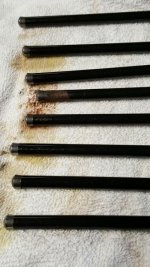
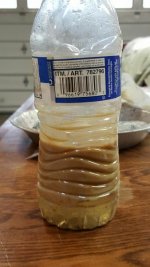
I decided to drain the oil from the engine and drop the oil pan to look for the missing pin from the rocker arm that fell out just before I sent the car to the body shop 3 years ago, I completely rebuild the engine and cylinder head. What I found inside the pan was some very cloudy ugly looking “milky crud”. It seems to me that the car was left in the weather, by my now famous body shop guy, and water got inside the engine through the valve cover that did not have a gasket or some other way. I pulled the rocker arms and removed the pushrods and noticed that the pushrods had a lot of rust on them and looking down at the tappets I can see that the water was sitting inside the tappets with the new push rods. It is hard to see everything clearly looking down from the top of the head but it looks like the tappets are pitted a little, there’s small dark spots sporadically in each one and the top edge of the tappets look black or dark brown. The very bottom of the tappet, where the ball of the push rod sits is shinny and clean. Looking from under the engine the cam bearings and the bottom of the tappets look fine, the pink engine lube material appears to be doing its job. My dilemma is should I pull off the head and replace the tappets and possibly the push rods? If I do pull off the head do I need to replace the head gasket? The engine has not operated since the rebuild. What are your thoughts?