• Hi Guest!
    If you appreciate British Car Forum and our 25 years of supporting British car enthusiasts with technical and anicdotal information, collected from our thousands of great members, please support us with a low-cost subscription. You can become a supporting member for less than the dues of most car clubs.

    There are some perks with a member upgrade!
    **Upgrade Now**
    (PS: Subscribers don't see this gawd-aweful banner
Tips
Tips

Use of silicone brake fluid

Largo_Larry

Freshman Member
Offline
What are the limitations with using silicone brake fluid? Are special seal kits and/or hoses required?

I just received this response from British Parts Northwest to a question regarding a replacement master cylinder for my 1974 TR6; <span style="font-weight: bold">"none of the manufactures approve their units for use with silicone fluid."</span>


Larry
 
I'm not authority on each suppliers compatibilities with Dot 5. I have had good success to date with The Roadster Factory's rubber products. I have never used British Parts Northwest's kits.
I have not purchased a rebuild kit in three years and can not speak for what suppliers have done in the mean time.
 
This is a long-running argument, no clear winner yet. Any seal that meets the US DOT standards should be fully compatible with DOT-5, and I have never found a seal that is not compatible with it.

However, the manufacturers do not test their products with DOT 5, and so they don't approve the use of it. It does have slightly different characteristics in terms of lubricity, viscosity, etc. and some fresh resleeves apparently do have trouble with sticking until they wear in a bit.

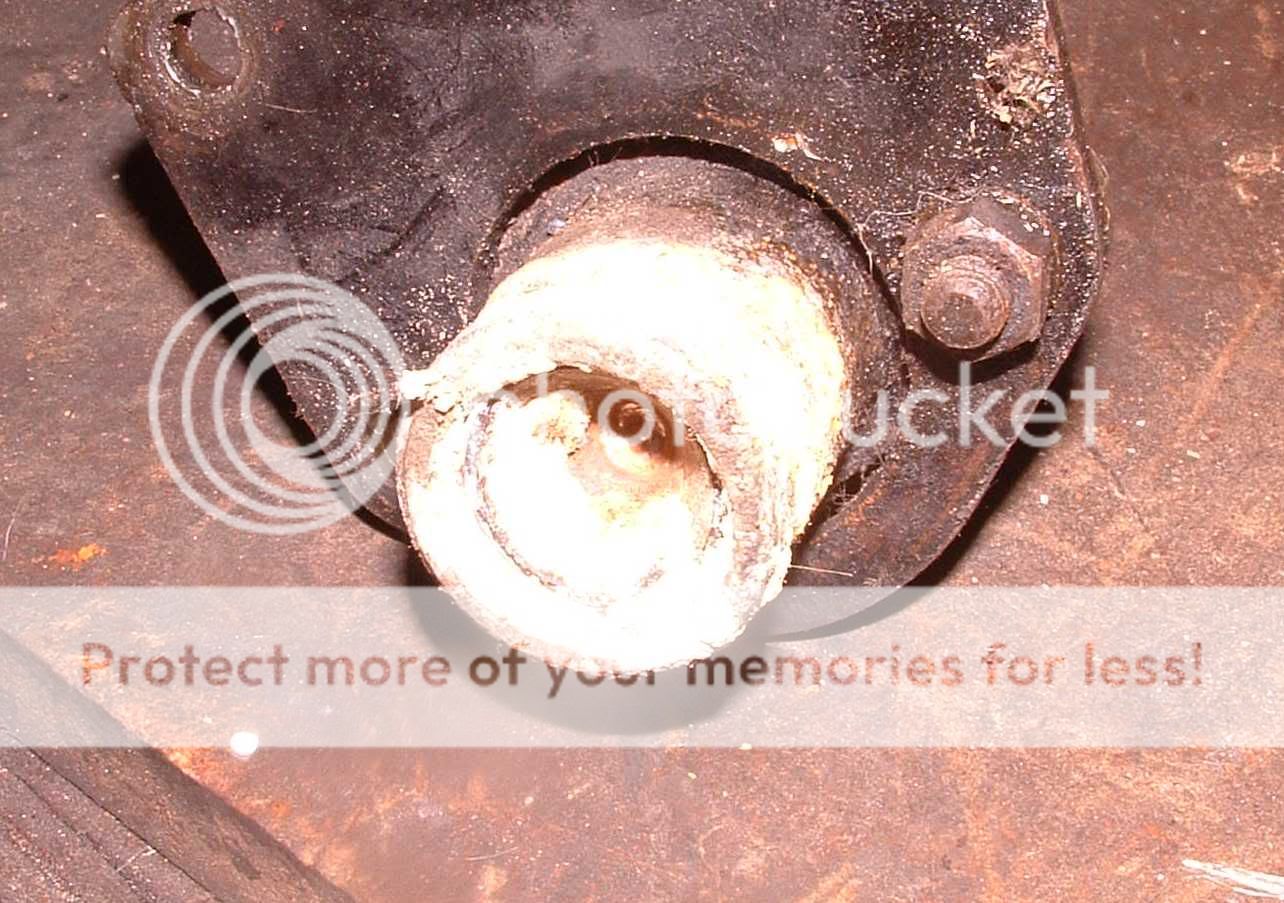
My opinion is that DOT 5 is so superior in terms of reduced corrosion, not attacking paint, and lasting forever (glycol should be changed every 2-3 years even if the car is not driven) that it is worth dealing with disadvantages like higher cost and loss of warranty. I don't want to ever see this on my car again:
DSCF0002_cropped.jpg


BTW, the original brake seals on the earlier Triumphs were not compatible with American brake fluid. If you didn't use Girling fluid, the seals turned to goo in just a few months.
 
I suppose manufacturers of brake components have to be the most conservative suppliers given the role of their parts in the safety of the vehicle -- but I have had no problems with DOT5 over many years of use.

Have used it with new rubber but have not had to replace any cylinders so can't say from experience... but I personally wouldn't hesitate to use it with a replacement MC.

Randall -- I've heard of slaves revolting but what you have there is a revolting slave!
 
I had a new slave cylinder go bad and rebuilt it with a TRF kit. A friend of mine lost his brakes in his Healey 100 as we were trying to stop at a red light. He was very fortunate that his emergency brake was in good working order. Both suspect parts were purchased at VB.
 
DOT-5 fluid has worked fine in my TR6 for the last six years, except for the revolting slave cylinder seal that turned to mush after four years. I wish I had taken some pictures of what the seal looked like. I did repair the cylinder with BPNW parts and DOT-5.
 
I have over two years of it in my brakes and clutch and I'm very happy with it.
 
Had my master cylinder rebuilt and sleeved with stainless by Apple Hydraulics. It came back with the 'No silicone fluid' note. I've been using DOT 5 for about 2 years now with no problems.
 
I do agree with the previous posts. I only use silicone fluid if the vehicle is on limited use. Most, if not all bebuilders will tell you not to use it. I have had no problems with a road car. Would not recommend for racing,etc.
Cheers,
D.
 
Larry
If you want still more information, check out wiki and the Buckeye Triumph tech article on this subject. Very comprehensive.
 
I've had DOT5 in my TR3 since 1982 and never had a problem. Clutch or brakes. If you have natural rubber seals DOT 5 is a must use. DOT 5 can't absorb moisture so it can't cause corrosion. DOT 3 has moisture in right from the factory. DOT 4 is a synthetic and will absorb moisture but much slower. That's why it must be changed every 3 years or internal damage can occur. DOT 3 and 4 can be mixed but DOT 5 can't be mixed with anything. I would never use DOT 3.
One thing to be cautious is if you have rubber and synthetic seals you must use DOT 5 as anything less will deteriorate the natural seals. If you have NOS seals don't mix Girling and Lock Heed seals in the same system. I believe the Girling are natural rubber and the Lock Heed are synthetic rubber.
 
5 here as well and very happy
 
Larry,
After leaking paint stripping brake fuid issues I took the advice of many here and switched to DOT5. I just overbled the system and purged it with DOT5 18 months ago. No neg issues, works fine.
 
Thanks guys for all your input. I feel much better about using DOT5 now. I've had it in my TR6 for almost 10 years but have had some issues with my master cylinder that I was concerned might have been related to the silicone.

I really did not want to go through all the work to switch back to traditional fluid.

Larry
 
Back
Top