• Hey Guest!
    British Car Forum has been supporting enthusiasts for over 25 years by providing a great place to share our love for British cars. You can support our efforts by upgrading your membership for less than the dues of most car clubs. There are some perks with a member upgrade!

    **Upgrade Now**
    (PS: Upgraded members don't see this banner, nor will you see the Google ads that appear on the site.)
  • When posting a classified ad, you MUST select a prefix from the drop-down next to the subject line. If you don't you will get an error and your ad will not be posted!
Tips
Tips

TR6 TR6 Wiring/amp gauge question

hondo402000

Darth Vader
Offline
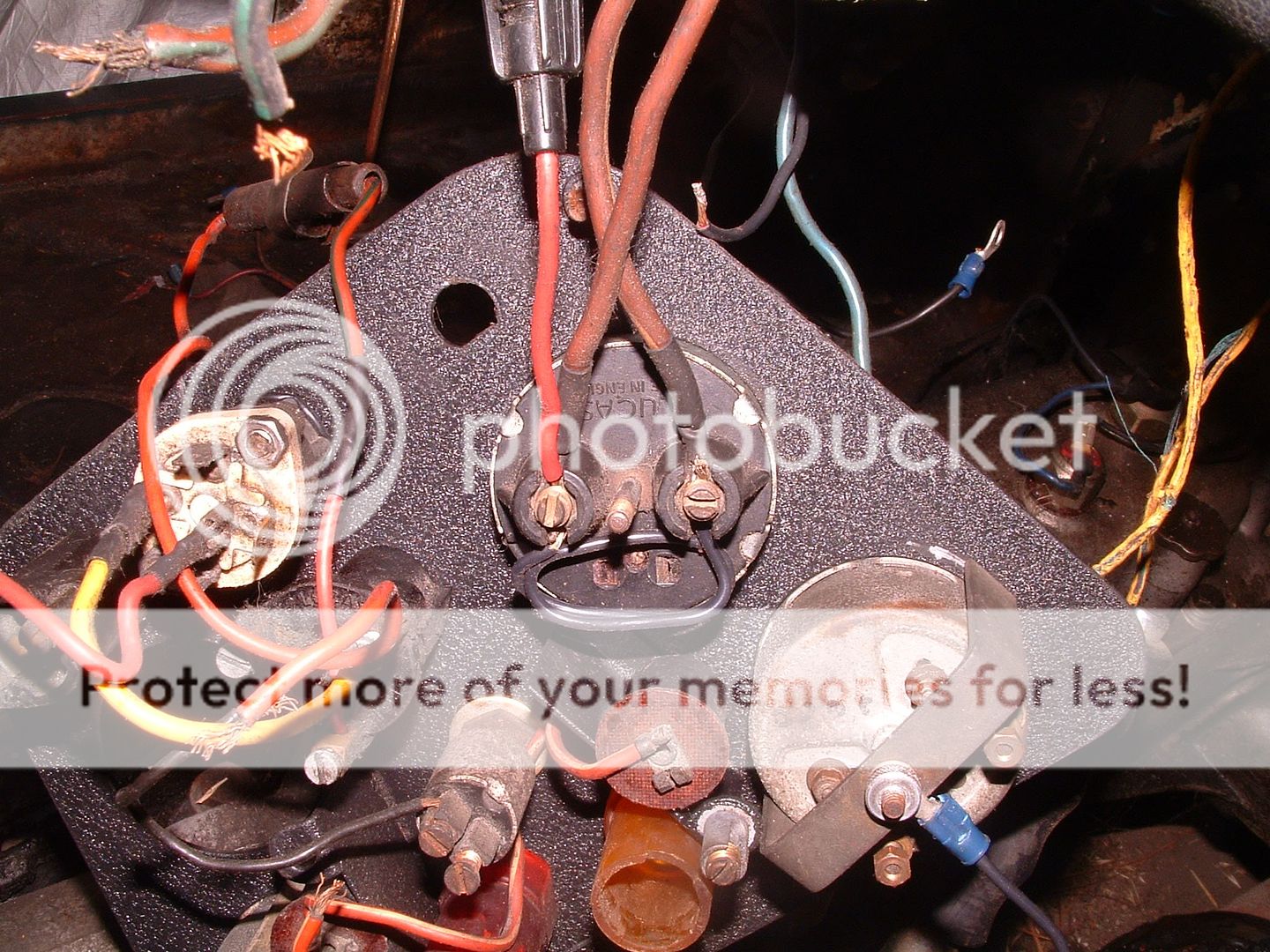
Ok since I am rewiring my TR6, in Roger williams book How to improve Triumph TR6. He talks about up grading alternators, which I have already done. I think I put a 55A bosch unit in. He also talks about running a parallel wire from the alternator output to the battery, which I did prior to the new harness. when I ran it straight to the + side of the battery seems that the current bypassed the amp gauge cause it didnt move much when lights and so forth were turned on. Now that I am putting in the new harness, and the ease of it to do would it be better to run a parallel Brown wire same size 10 gauge to the amp meter and the Brown white wire Amp gauge out to either the starter or straight back to the + side of the battery. And does anyone know the amp rating at full Charge or Discharge of the amp gauge 35 Amp?

Hondo
 
It's something like that. You might check what the wire gauge is in your new harness, the original TR3 harness has wire that is plenty big for 60 amps.

And should you choose to do so, it's easy to make the ammeter read lower for the same current. Basic ides is to add some smaller gauge wire across the ammeter, so part of the current flows through the wire and part flows through the ammeter. Here's a shot of the shunt I added to my TR3A, so the 60 amp Ford alternator wouldn't peg the ammeter:

Ammetershunt1.jpg
 
Or... jumper the two ammeter wires together and thoroughly insulate them. Remove the ammeter and fit a volt meter instead now that you have a big alternator.
 
Strongly agree with bypassing the ammeter and installing a volt meter if you are fitting an uprated alternator. Did that with my Tr6. Battery voltage gives you a better idea about reserve than the ammeter. The later Tr6 voltmeter doesn't look out of place when installed in the dash despite the fact that the later guages point upward rather than down.
David
 
Personal preference, as always. Myself, I feel the ammeter gives you more information about what is happening right now, rather than what has happened in the past. The Stags have the original voltmeters and they pretty much don't tell you that there is a problem, until the battery is already run down to where it won't reliably start the car and is only going to run the engine for a few more minutes. With an ammeter, I can tell instantly when a diode goes bad (for example) even though the battery is still nearly fully charged.

The ammeter will also tell you if your brake lights are working, the radiator fan is running, headlights are on, etc. Instant indication of shorts, too. On a recent run with the club, the ammeter went to the discharge peg and so I knew instantly to pull over and find the short. 30 seconds later I was back on the road, with no harm to the wiring. If I had only had a voltmeter, the first indication would have been the smoke leaking out ...
 
I think I will stick with the original Amp gauge. Just add addition wire from alternator to amp gauge and additional wire from gauge to starter. If it pegs to either side I will add a shunt wire.

thanks
Hondo
 
Back
Top