• Hey Guest!
    British Car Forum has been supporting enthusiasts for over 25 years by providing a great place to share our love for British cars. You can support our efforts by upgrading your membership for less than the dues of most car clubs. There are some perks with a member upgrade!

    **Upgrade Now**
    (PS: Upgraded members don't see this banner, nor will you see the Google ads that appear on the site.)
Tips
Tips

TR2/3/3A TR3 fuel pump question

jwolff

Jedi Hopeful
Offline
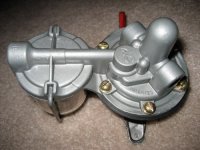
Now that I have my car running I've noticed the fuel pump is leaking quite badly. I'm guessing this has been discussed before, but is there a consensus as to whether or not to rebuild the original or buy a reproduction? Is there a reason not to buy the first one on this page as it is cheaper than a rebuild kit: https://trf.zeni.net/webcatalog/specials8.27/6.php
or is the rebuild kit from moss at around $15 adequate?
Thanks for any advice,
Jason
 
Most think sticking with the original is best if possible.
The main leak problem seems to be a the inlet connection. It can appear to be ok but gradually soak the entire pump. Look there first. Drive you crazy.
A search will come up with quite a bit on the subject.
 
Jason,
I got the new repro with the priming lever form moss. Pretty nice unit except that they had to put an adapter at the inlet to match the threads of the fuel line. Be sure to tighten it well because as Richard notes, it is the prime location for leaks. The second location for leaks is the rubber seal at the glass bowl. If you rebuild an old unit make sure that the aluminum housing at the top of the bowl hasn't been distorted by the glass retaining bale pulling down on it for years. I went through a lot of old pumps to find one that didn't leak due to distortion and finally gave up and bought the repro. PKPoole
 
I agree -- whether a rebuild will fix the leak depends on where the leak is and the most common spots are the connections -- though on my cars the outlet connections were the leakers.

Get the pump clean and dry (carb cleaner will remove traces of old fuel) then get a dark paper towel (like the blue ones at many gas stations or even the brown ones will work) and dab around the pump body and connections as the engine is running.

A dark paper towel will quickly show any fuel it picks up. If you wait until the fuel is noticeable it may be hard to tell where it came from.
 
Thanks for the advice... it is actually spitting out fuel from the left hand side of the pump as well as the glass bowl seal.
 
If you do opt for a replacement pump, check to see how the cross pin is located. Some of them have the pin only held by being staked into the body, and they have been known to work loose with potentially disastrous results. (Don't recall who offhand, but someone had a broken camshaft that was traced to that pin coming loose.)

There was originally a cork seal for the sediment bowl, that tends to dry up and crack over time. The TRF kit contains a "rubber" seal that works quite well; or I'm sure you could cut one from some suitable sheet (being sure to use something that is compatible with both gasoline and ethanol).

The outlet fitting is another common leak point, because the original used a special compression sleeve that is NLA. Here is one solution https://docs.google.com/viewer?a=v&p...z&hl=en_US. Others have had good luck adding some material (like valve stem packing) between the nut & sleeve. One of my first projects after buying an old lathe was to make a custom nut that better fits the modern sleeves.

Last I heard, the Moss kit did not include the shaft seal. Probably not important unless you are going racing (or autocrossing), but without it you can lose oil through the weep hole in hard right turns.
 
I had an original AC pump rebuilt by the Antique Auto Parts Cellar in Weymouth, MA. Looks new and works flawlessly now for 1000's of miles.
 

Attachments

  • 26293.jpg
    26293.jpg
    68.4 KB · Views: 251
Back
Top