• Hey Guest!
    British Car Forum has been supporting enthusiasts for over 25 years by providing a great place to share our love for British cars. You can support our efforts by upgrading your membership for less than the dues of most car clubs. There are some perks with a member upgrade!

    **Upgrade Now**
    (PS: Upgraded members don't see this banner, nor will you see the Google ads that appear on the site.)
Tips
Tips

TR2/3/3A tr2 painting questions

sp53

Yoda
Country flag
Offline
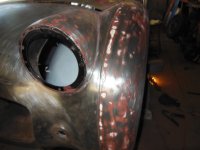
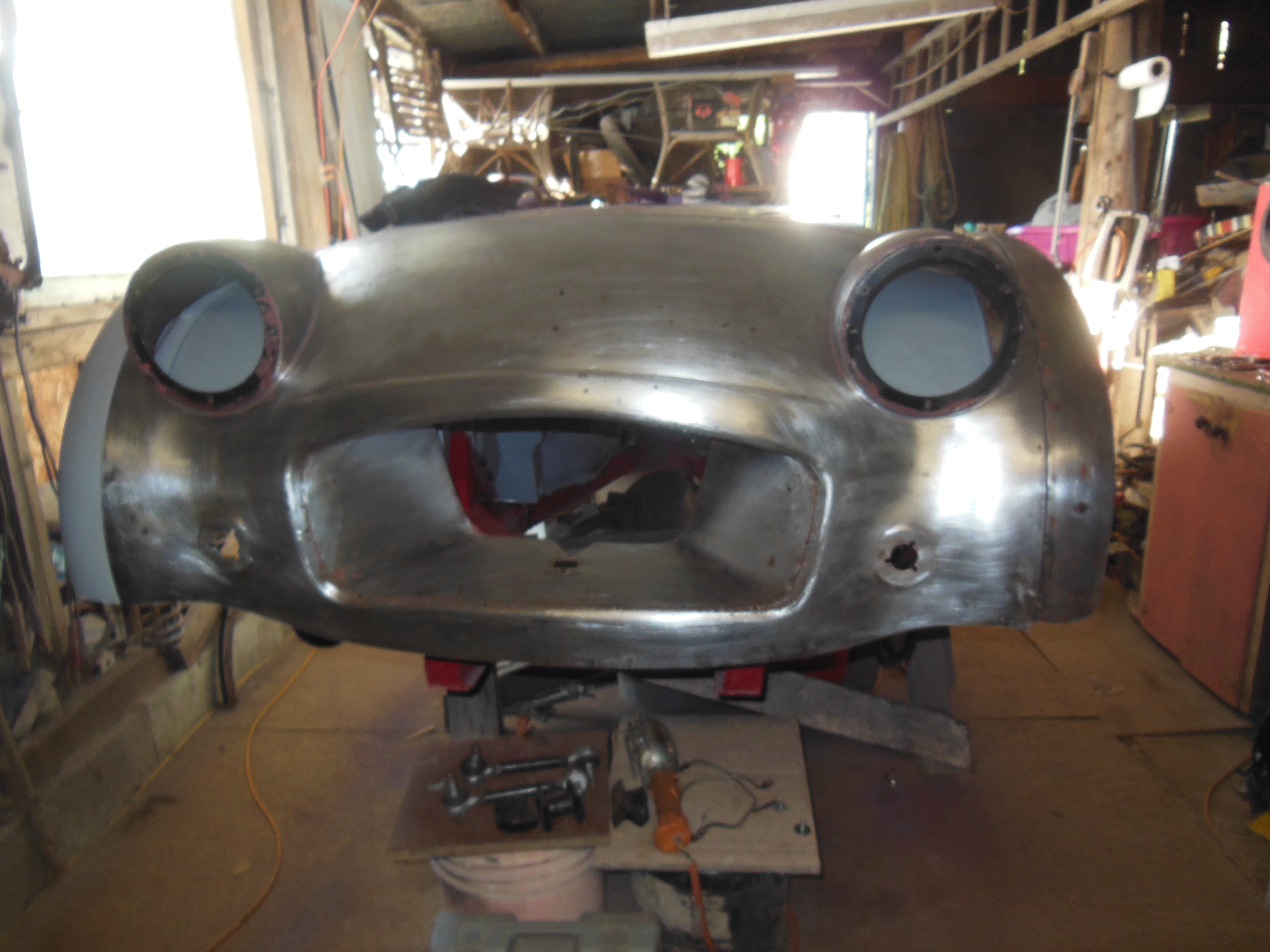
Took some pictures of the progress on the tr2 and wanted to ask some ideas about getting the last little bit of paint off the car. The car has a lot of those little dings and low spots with the primmer and some paint inside the dings. The CRE primmer I am using states they would like an 80 grit texture on the metal. My fear is the 80 grit is too much for the thin metal and before I get all the paint out of the dings I am going to do some kind of damage, like sand the car to dust.

I used a 8 inch mud hog 8 sander where I could and die grinders plus paint remover and then hand sanding with 80 grit. Maybe I should remove the paint out of the dings with paint remover or perhaps spot sand blasting. Anyways, the 80 grit is freaking me out, and I want to ask what people thought.

Steve
 

Attachments
  • DSCN1914.JPG
    DSCN1914.JPG
    3.3 MB · Views: 10
  • DSCN1913.JPG
    DSCN1913.JPG
    3.4 MB · Views: 9
  • DSCN1908.JPG
    DSCN1908.JPG
    3.3 MB · Views: 10
  • DSCN1919.JPG
    DSCN1919.JPG
    3 MB · Views: 9
It's looking nice!

Unless you really work on an area, 80 grit should not eat through the metal. That said...if the paint and old primer is well bonded to the metal, you don't have to remove it. You have the option of using it as a base for the next coat of primer.

If you must remove it, and you are to too far along for sand blasting (which it looks like you are), then stripper is the book answer.
 
Thanks John it has been ten years since I did any painting and body work, and I feel insecure about doing body work and painting until I get in the grove plus 10 years ago was the first time I had ever done any body work.

When I did the body work back then, I believe I used 120 grit for the profile of the metal. I just cannot remember. This 80 grit cuts seemingly deep into the metal.

I have the fenders on the tub that is 3 feet off the ground temporarily, so I do not hurt my back as much as bending over so much. I can easily take the panels off the tube and sand blast the small areas with the deep pits; there are a lot of them. I have the cage nuts cleaned out well and the bolts go in friendly.

I was told somewhere to always use a block when I am sanding. I thought the block was used, so I did not dig into the area with my fingers. That got me freaked out because I could see with the 80 grit how this could be true. Common sense should pull me through the metal, but once the doubt gets too strong I need some encouragement and knowledge to keep moving which is the motto at my age. (Keep Moving)

Anyways once I get some primmer on the fenders and start block sand the primer and paint, I should feel more in control because I can see what depths I am cutting into on the paint and metal.

Steve
 
Well, you are doing great as far as I can tell! Block sanding is important to fair out any high or low spots. The longer the block, the better. Alternate your sanding front to back, and then circular for about 1/3 of the time. The block will tell you if you need to either body work up or fill any low areas...and it'll show the high areas too, but those will have to be body worked down more when they become obvious.

For that show room finish, and especially on darker colors that reflect the most, you will block sand 220 wet after the primer coat. If you have areas the block does not touch, then you prime again...preferably with a different color...and wet sand with the block again. You alternate colors so the previous color starts to show through before you cut down to bare metal. Seeing the previous color start to show means "STOP!" You keep priming and wet sanding until the block touches all the low areas. One last prime at that point and 400 wet block sanding will give you the mirror finish you see at the shows.

When sanding, if you cheat and use your hand to reach the lows that the flat block cannot get to, then it will show in the final finish...as a waviness. This is very time consuming, but very worth it since your paint job could well outlast us old guys!
 
Last edited:
Back
Top