• Hey Guest!
    British Car Forum has been supporting enthusiasts for over 25 years by providing a great place to share our love for British cars. You can support our efforts by upgrading your membership for less than the dues of most car clubs. There are some perks with a member upgrade!

    **Upgrade Now**
    (PS: Upgraded members don't see this banner, nor will you see the Google ads that appear on the site.)
  • When posting a classified ad, you MUST select a prefix from the drop-down next to the subject line. If you don't you will get an error and your ad will not be posted!
Tips
Tips

Taking apart a clutch M/C

tdskip

Yoda
Country flag
Offline
In case you haven't done this job yet, here is how to take apart a clutch master cylinder from a TR4a. It is basically identical to taking apart a brake master cylinder, but here it is in detail for your viewing pleasure (and will be easier to find via search going forward).

As it was bought from Jack Wheeler;
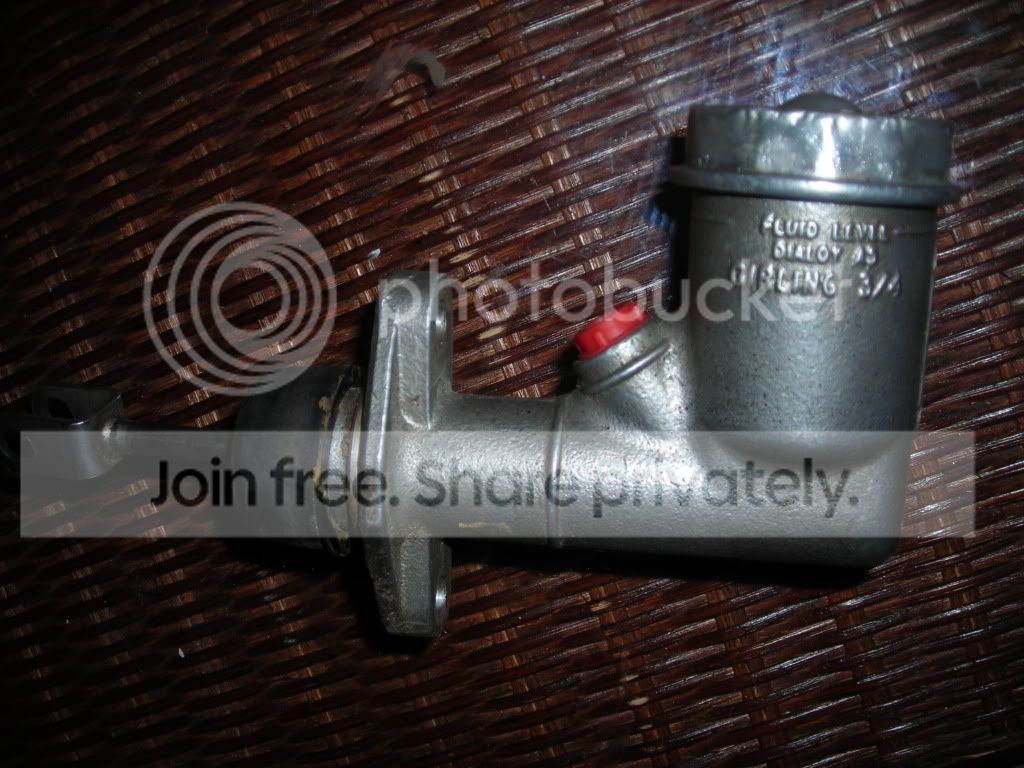
tr4aclutchmaster12-7-09.jpg


Pull the rubber boot back carefully so you don't tear it, if it is ready to tear or crumbly you should replace it.
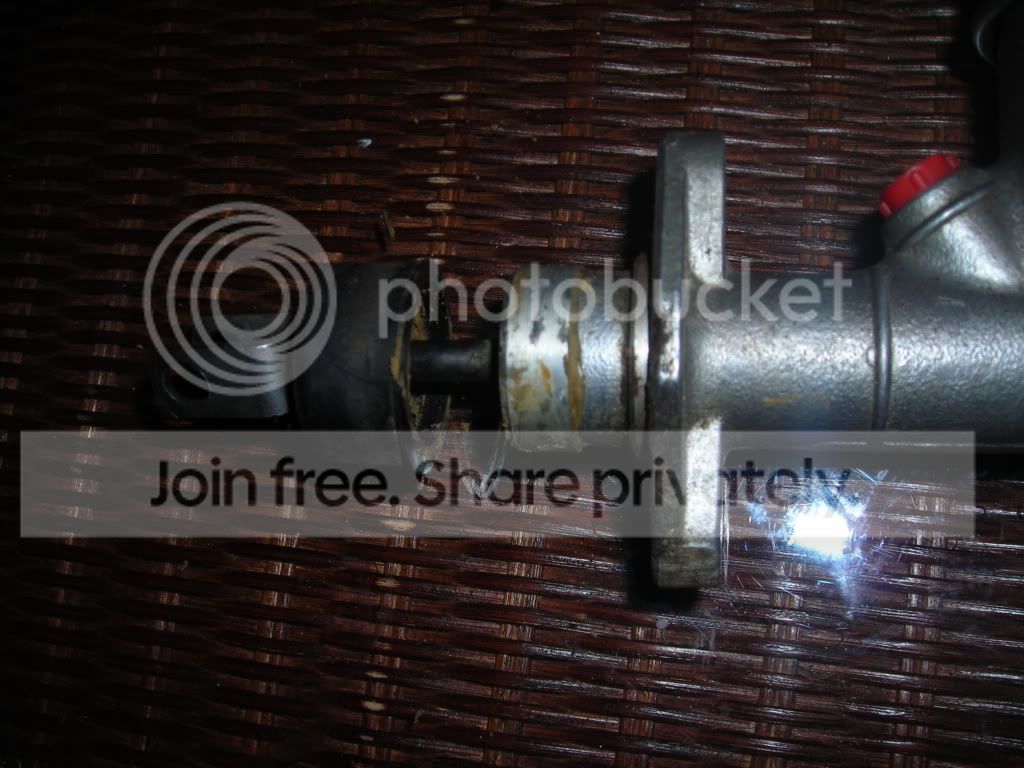
tr4aclutchmaster12-7-091.jpg


You'll probably need to clean the opening up some, but you'll see a circlip in there. These don't require any special tools to remove, just a pair of pliers to squeeze them together. You can see the square ends of the circlup that you squeeze sticking out of the grease on the bottom there.
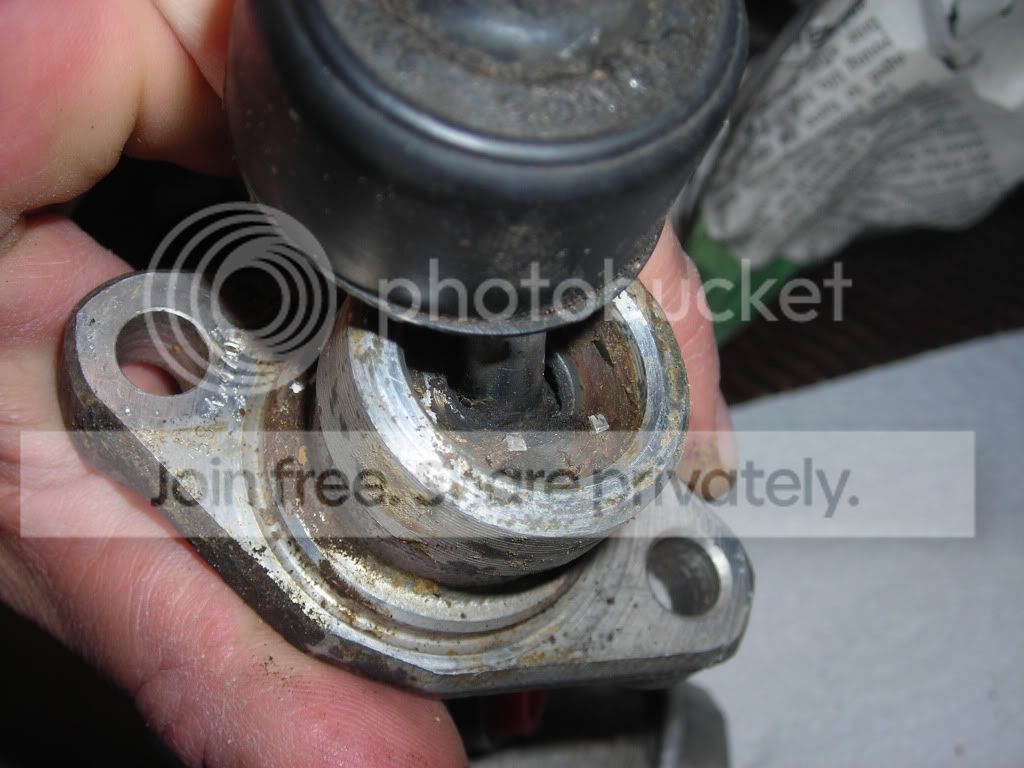
tr4aclutchmaster12-7-094.jpg


Once the circlip is removed you can pull this part out
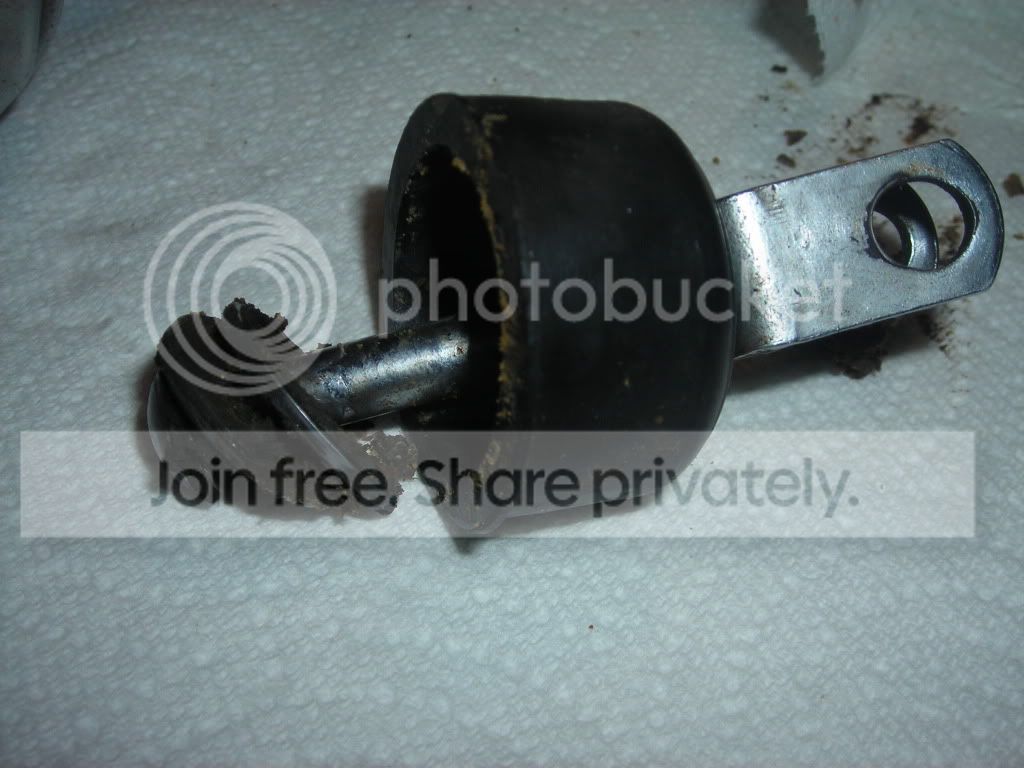
tr4aclutchmaster12-7-095.jpg


That is the piston in there, you will need to probably slam it on a piece of wood a couple of times to get it loose
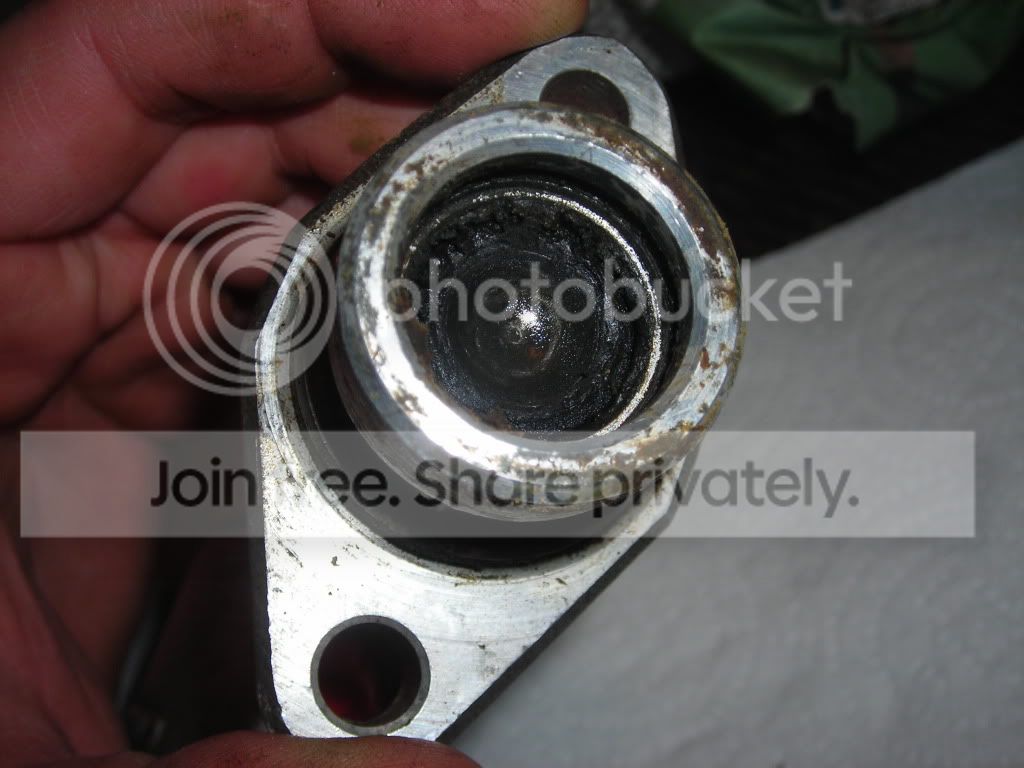
tr4aclutchmaster12-7-096.jpg


Once the piston is free gently pull it out. You may need to use a pair of narrow tip pliers to get it started
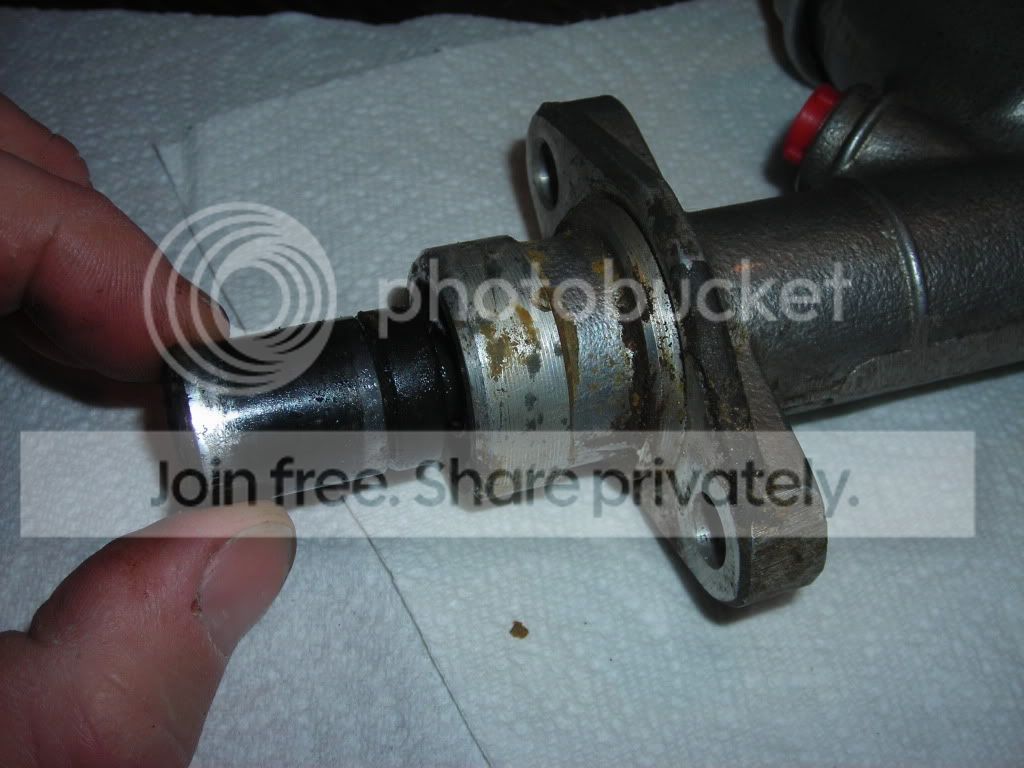
tr4aclutchmaster12-7-097.jpg


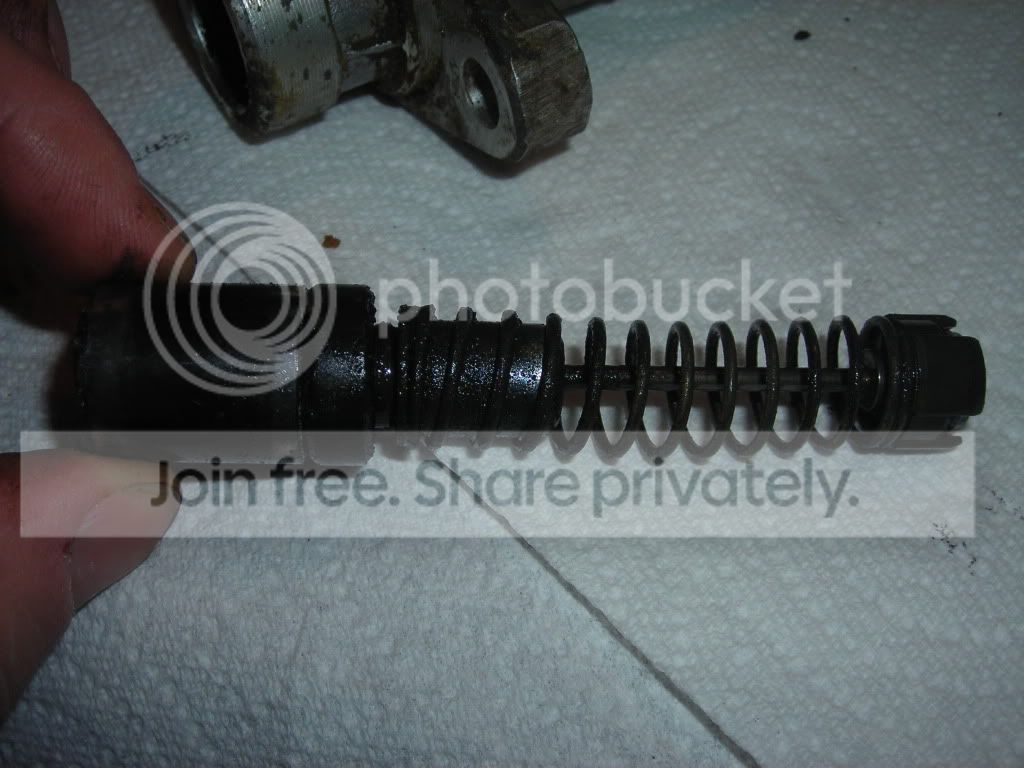
Here is the piston as it comes out

tr4aclutchmaster12-7-098.jpg


And here it is ready for cleaning and the repair kit. Total elasped time about 5 minutes.
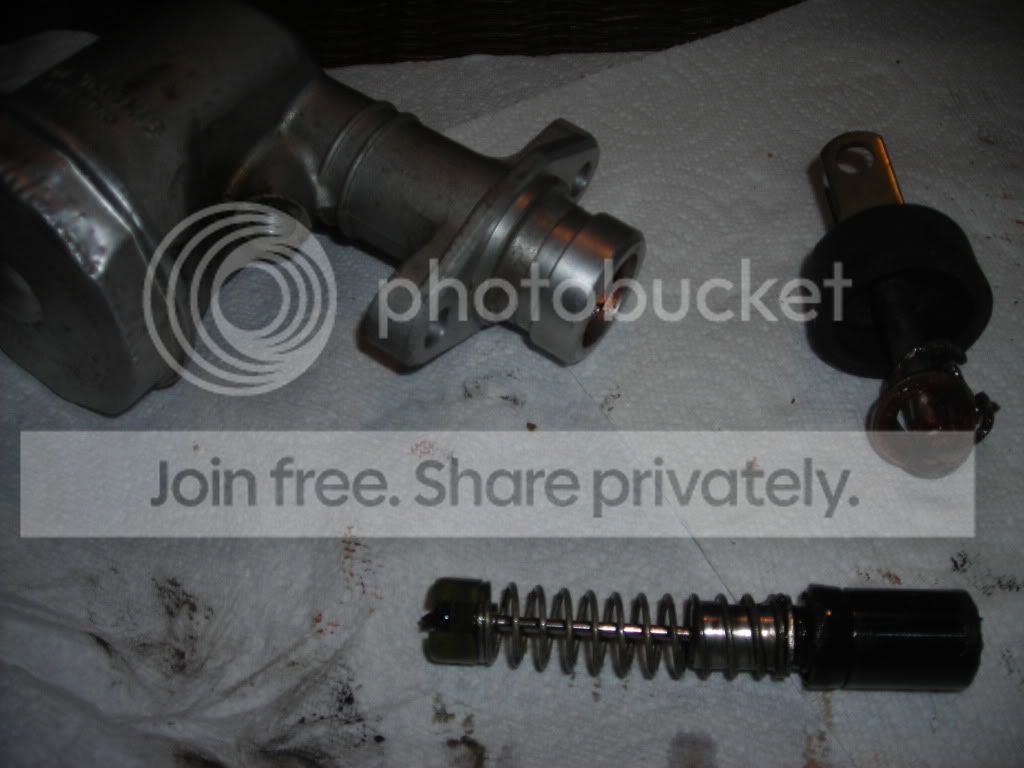
tr4aclutchmaster12-7-099.jpg


I'll try to document putting it back together tonight or tomorrow.
 
Wow TD that should go on Wiki Pidia. That is really great, the pics were superb! Flesh it out with some dialog and your going to be a bunch of help to quite a group of folks.

Great, Tinkerman
 
Wow, is that really the right pushrod? Looks much shorter than the TR3 pushrods.

Otherwise it's almost identical, except of course for the integrated reservoir instead of remote can.
 
TR3driver said:
Wow, is that really the right pushrod? Looks much shorter than the TR3 pushrods.

I have no idea if it is correct, but that is what was in there! It seemed to fit correctly.

The TR3 and TR4 M/C were a bit different, right?
 
tdskip said:
The TR3 and TR4 M/C were a bit different, right?
Oh yes, definitely. TR3 from the introduction of front disc brakes through TR3B used a separate "tin can" reservoir to supply fluid to both clutch & brake MCs. The TR4-4A went back to having the reservoirs integrated with the MCs.

The Moss illustration shows the shorter pushrod as well, so it's probably correct. I just wasn't aware of that difference. My interest in the later TRs falls mostly into what parts I can use on a TR3/A
grin.gif
 
A nice upgrade, for me anyway, is to use the TR4 brake and clutch M/C on the TR3. I can get rid of the "can". It can be changed back with no problems for the purist. I have had problems with the can rusting and leaking on the paint.

Marv
 
Hey guys - a couple questions on putting this back together (seems like the thing to do now that I took it apart);

What do you use do to clean up the housing?

Do you use brake fluid or something like WD40 for lubrication with the hone?

How long do you run the hone if the inside bore is already smooth?

How much grease do you use upon reassembly and where do you put it?
 
That looks clean enough that I would just wipe it down with some "brake solvent" on a rag. For more severe cases, I blast with glass beads.

Light oil for the hone, WD-40 is acceptable. But if the bore is already smooth, I leave it alone. There's only maybe .020" difference between "brand new" and "worn out", so each .001" is kind of expensive.

And as I mentioned before, I don't use any grease at all. Overall, I don't think it helps any, particularly the "Girling Red" (which turns into hard crumbles when it gets old).
 
Even if it's "shiny-clean" on the I.D. (ovality can be a consideration, too) I run a brake hone thru it for a few passes. When I see uniform cross-hatch pattern the length of the bore it's done.

Slow speed drill and in-and-out movement of the hone, brake fluid or mineral oil as a cutting agent. Same as honing a block, aim for a 45* cross-hatch.


<span style="font-style: italic">EDIT: That appears to be the same cylinder as the Elans and Spit/GT6, BTW.</span>
 
DrEntropy said:
<span style="font-style: italic">EDIT: That appears to be the same cylinder as the Elans and Spit/GT6, BTW.</span>
...except that most of the cylinders on Spits and GT6s (and Heralds and Vitesses) are "slanted" more,* as opposed to the 90-degree angle between body and reservoir on this cylinder.

*An exception would be the single-circuit brake master used on pre-1968 GT6s for the US market; those have the same 90-degree shape, even though they're mounted at the same "slant"; that results in a not quite upright reservoir in the GT6.
 
Back
Top