• Hi Guest!
    If you appreciate British Car Forum and our 25 years of supporting British car enthusiasts with technical and anicdotal information, collected from our thousands of great members, please support us with a low-cost subscription. You can become a supporting member for less than the dues of most car clubs.

    There are some perks with a member upgrade!
    **Upgrade Now**
    (PS: Subscribers don't see this gawd-aweful banner
Tips
Tips

Sprite Body Work Tips & Tricks For A Novice?

60Bugeye

Jedi Hopeful
Country flag
Offline
Hi,

My summer project is to dive into the body work on my 1960 Sprite. I am preparing myself by taking a MIG welding class, reading everything I can on the subject, watching videos about it, etc.

When I first got the car, I though I would just outsource 100% of the body work, but I really want to do this myself for the self-gratification and the significant $$ savings. I do NOT plan on painting the car myself.

My Frogeye has rust in the usual spots; rockers, floors (mostly in the corners), spring boxes, lower extremes of rear fenders, rear apron, and a bit in the boot floor. This is the rust I am aware of. The bonnet appears to be 100% solid.

So, my general question is:

For any experienced or inexperienced body-work folks here, what tips & tricks and advice would you give on the subject of rust repair (cutting/grinding/welding), specifically on the Frogeye, and in general for LBCs?

I appreciate any and all wisdom, even if you say "Don't do it!" :smile:

Cheers,

- Chris
 
I completely understand your feeling about doing things yourself. It's nice to be in total control of the project. Still thinking on the positive, you most surely can do every single job.

On the down side:
*doing every job means buying lots of tools you will use only once
*you will take many times longer to do even simple things as you learn
*You will spend money on things you don't need, because you didn't know
*you and only you alone will really appreciate what you've really done.
*you will turn your house into a junk yard

So bottom line is, if you want a car... buy a car. If you want a hobby that will last for many years, do your own thing.

I'm $40k plus 4 years into a TR3 and even a fool wouldnt call my project a car. At least not yet. Even when it's done it won't be worth half what it cost. So I better be enjoying the journey.
 
OTOH, if you outsource everything, you will certainly have much more $$ into it than it is worth and almost surely more than youy would have in tools. That is, unless you go absolutely absurd with purchases. Also, I don't agree that only you will know what you have accomplished. Everyone close to you will see and hear as progress is made. And I'm quite certain that you will make a pest of yourself explaining it to everyone who will listen.

As for advice, the first thing is don't rush. Take your time and do it right. Get advice and help when you can from those who have already been there. If you feel like any particular step is beyond your ability, then farm that out to a pro but be prepared for the price tag.

For many of us, this is an important and enjoyable part of the hobby. Others would rather have it done or buy one already finished. Only you can decide which group you fit best.
 
All true.

I am interested in both having the car and the experiences I will gain along the way. I enjoy learning new things. Buying lots of tools that I may use once doesn't worry me too much.

Now, turning my house into a junkyard is a bit of an issue since my wife will freak; I have done a pretty good job thus far of keeping my work area clean and jettisoning the junk as it becomes no longer useful.
 
One part of me wants to be driving the car now, but I really enjoy my time working on it, cleaning and restoring parts, researching, learning new skills, and buying new tools. I already know that I want the paint to be perfect, so I am planning to outsource that piece, which will cost plenty.

My family already hears enough about the car, and my neighbors are beginning to notice I have it (noise, me walking around with goggles and a respirator, etc.). In fact, one of my neighbors informed me that I had inspired him to buy a vintage motorcycle and restore it--something he had been wanting to do for years! :smile:
 
Chris, for Ms Triss, I outsourced the body & paint - otherwise it would have added years to the restoration and I figured I didn't need to know everything. For Luigi, I like you am planning to weld it myself The advice I have seen/ read is practice practice practice on scrap. I also figure I'll start with the least visible spots and move up to most visible.

Don't think there is a right answer but, some at least has to do with when you plan to drive.
 
JPSmit said:
Chris, for Ms Triss, I outsourced the body & paint - otherwise it would have added years to the restoration and I figured I didn't need to know everything. For Luigi, I like you am planning to weld it myself The advice I have seen/ read is practice practice practice on scrap. I also figure I'll start with the least visible spots and move up to most visible.

Don't think there is a right answer but, some at least has to do with when you plan to drive.

My plan is also to practice on scrap similar in composition to the body panels/floors, etc., until I feel ready to move onto the car.

I also plan on fixing things like my heater box, or any other small stuff that may require welding-related restoration beyond sanding and repainting. The worst that can happen with those items is having to buy replacements.

Doing the body work myself will undoubtedly add time to the restoration, but the car came to me unexpectedly, so I am not on any critical timeline.

So I am curious, how much body work did Ms Triss require, and roughly how much (minus paint) did it cost to have someone do it?

Cheers!
 
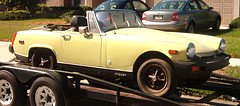
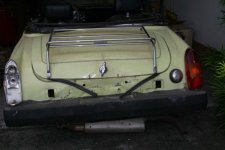
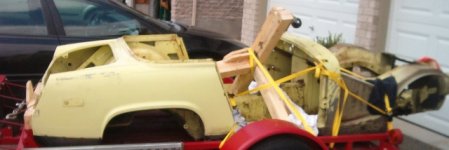
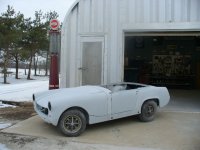
Ms Triss only had two rust spots, each about an inch around. Plus she had been lightly rear ended, so, rust repair, crease taken out on side, rear valance replaced, chrome bumper conversion, side lights filled in, etc. etc. ended up being 120 hours at $30 per hour (I got a deal) and then about $800 paint.
 
before (day one)
 

Attachments

  • 24085.jpg
    24085.jpg
    16.6 KB · Views: 508
and the back
 

Attachments

  • 24086.jpg
    24086.jpg
    22.8 KB · Views: 522
during, going
 

Attachments

  • 24087.jpg
    24087.jpg
    48.5 KB · Views: 510
In shop
 

Attachments

  • 24088.jpg
    24088.jpg
    97.7 KB · Views: 521
tada!
 

Attachments

  • 24089.jpg
    24089.jpg
    93.6 KB · Views: 504
JPSmit said:
Ms Triss only had two rust spots, each about an inch around. Plus she had been lightly rear ended, so, rust repair, crease taken out on side, rear valance replaced, chrome bumper conversion, side lights filled in, etc. etc. ended up being 120 hours at $30 per hour (I got a deal) and then about $800 paint.

Wow. Given the rust on my frog, I'm guessing outsourcing would run at least 3X your cost.
 
60Bugeye said:
JPSmit said:
Ms Triss only had two rust spots, each about an inch around. Plus she had been lightly rear ended, so, rust repair, crease taken out on side, rear valance replaced, chrome bumper conversion, side lights filled in, etc. etc. ended up being 120 hours at $30 per hour (I got a deal) and then about $800 paint.

Wow. Given the rust on my frog, I'm guessing outsourcing would run at least 3X your cost.

good incentive to practice welding :cheers:
 
I am nearly finished with a similar project, a 1966 Triumph Spitfire MK2, that was more rust then metal. Here are a couple of things that may be helpful.
- Before you cut off or remove any body panels use a tape measure and measure all of the door, bonnet, and boot openings so you have reference information when welding in new pieces.
- Before you cut any metal out of your car brace the body tub to maintain all of the proper dimensions.
- Take digital pictures of everything before you start. I can't tell you how many times I went back to these pictures on my restoration to reference how something your go together, or which way a hydraulic pipe should be bent.
- Lastly, never throw anything out that you have removed from your car until the car has been completed and driving. You never know when you will need one of these pieces as a reference, or to be cleaned up and reused.

Oh, one last tip, and this may be the most important. Never stop a days work on your car on a bad or negative note. You want to stop after you have been successful at some part of the restoration. It's a lot easire to come back to your car if the last time you did something you were successful. It's a lot harder if you left working on your car because you were frustrated.

Good Luck
 
And take lots and lots of before pictures that you can mark up with the dimensions for future reference. During and after pics help to show higher value to the insurance company for your agreed upon value in the event of a total loss or theft.
 
JKB1957 said:
I am nearly finished with a similar project, a 1966 Triumph Spitfire MK2, that was more rust then metal. Here are a couple of things that may be helpful.
- Before you cut off or remove any body panels use a tape measure and measure all of the door, bonnet, and boot openings so you have reference information when welding in new pieces.
- Before you cut any metal out of your car brace the body tub to maintain all of the proper dimensions.
- Take digital pictures of everything before you start. I can't tell you how many times I went back to these pictures on my restoration to reference how something your go together, or which way a hydraulic pipe should be bent.
- Lastly, never throw anything out that you have removed from your car until the car has been completed and driving. You never know when you will need one of these pieces as a reference, or to be cleaned up and reused.

Oh, one last tip, and this may be the most important. Never stop a days work on your car on a bad or negative note. You want to stop after you have been successful at some part of the restoration. It's a lot easire to come back to your car if the last time you did something you were successful. It's a lot harder if you left working on your car because you were frustrated.

Good Luck

Excellent advice. Thanks!
 
Brosky said:
And take lots and lots of before pictures that you can mark up with the dimensions for future reference. During and after pics help to show higher value to the insurance company for your agreed upon value in the event of a total loss or theft.

I hadn't considered how the insurance would work once it was completed. Thanks!
 
Back
Top