[ QUOTE ]
The Turbo IS the replacement. Which is why turbocharged cars are restricted in displacement to non turbocharged cars in EVERY form of racing world wide. Which is also why forced induction vs normal aspiration are like apples and oranges.
[/ QUOTE ]
Which is another way of saying "displacement is a replacement for turbocharging." If they allowed turbocharging on larger diplacement engines, the racers would run turbochargers on larger displacement engines. And then we'd be right back where we started from - there is no replacement for displacement.
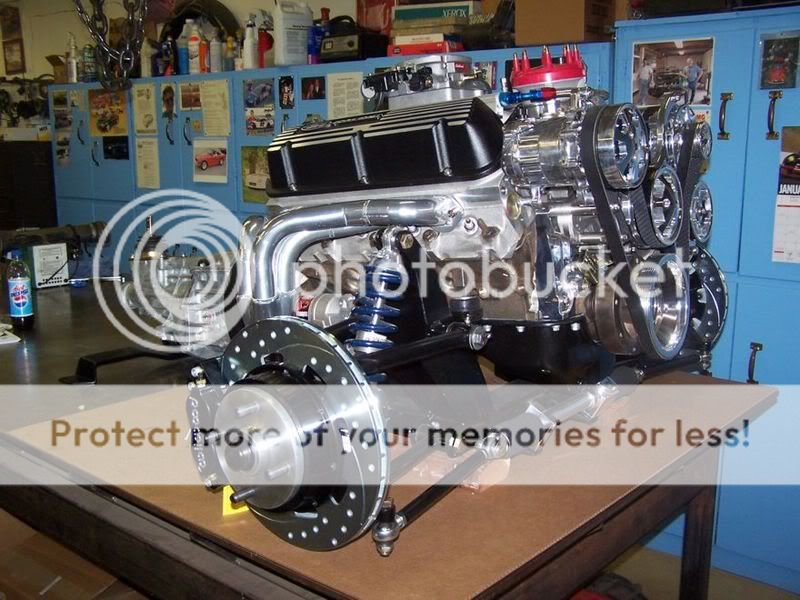
Comparing an engine used for racing to an engine used on the street is really comparing apples to oranges. What's good for the track isn't what's good for the street. Engines identical to the Ford 302 shown above were dyno tested by both Car Craft and Hot Rod magazines, and both got identical numbers: 375hp, and over 300lbft torque from off idle to redline (6,000 rpm), with a peak of around 350. I don't believe you'll get that kind of torgue curve out of a streetable 2.3L turbocharged 4 cylinder. In fact, I don't believe you'll get that kind of torque curve out of any 23.L turbo engine. On the race car, you can gear up to run at 10,000 rpm, but getting out of the pits can be very sluggish until you get the rpm up. That wouldn't be a lot of fun on the street.
With some reasonable modifications, I could get well over 400hp out of that 302, but I wouldn't want to drive it on a regular basis. It would become a real pita for use as a street driver. I have driven an MGB with that same engine, and it is not only EXTREMELY fast, but also very docile. Your grandmother could drive it.
Comparing forced induction to normal asperation is NOT the same as comparing forced induction to larger displacement. Forced induction and displacement are two totally different things. Whatever displacement engine you have, you can get more out of it with turbocharging; Whatever power you get out of a turbocharged engine, you can get more out of it by increasing the displacement.
 but were afraid to ask:


 Hey Guest!

 Hey - did you know if you click on the title of a thread it will take you to the first unread post since you last visited that thread?
 STOP!! Never post your email address in open forums. Bots can "harvest" your email! If you must share your email use a Private Message or use the
  smilie in place of the real @
 Pretty Please - add it to our Events forum(s) and add to the calendar! >> Here's How <<


