• Hey Guest!
    British Car Forum has been supporting enthusiasts for over 25 years by providing a great place to share our love for British cars. You can support our efforts by upgrading your membership for less than the dues of most car clubs. There are some perks with a member upgrade!

    **Upgrade Now**
    (PS: Upgraded members don't see this banner, nor will you see the Google ads that appear on the site.)
Tips
Tips

Same color illusion

Basil

Administrator
Staff member
Boss
Offline
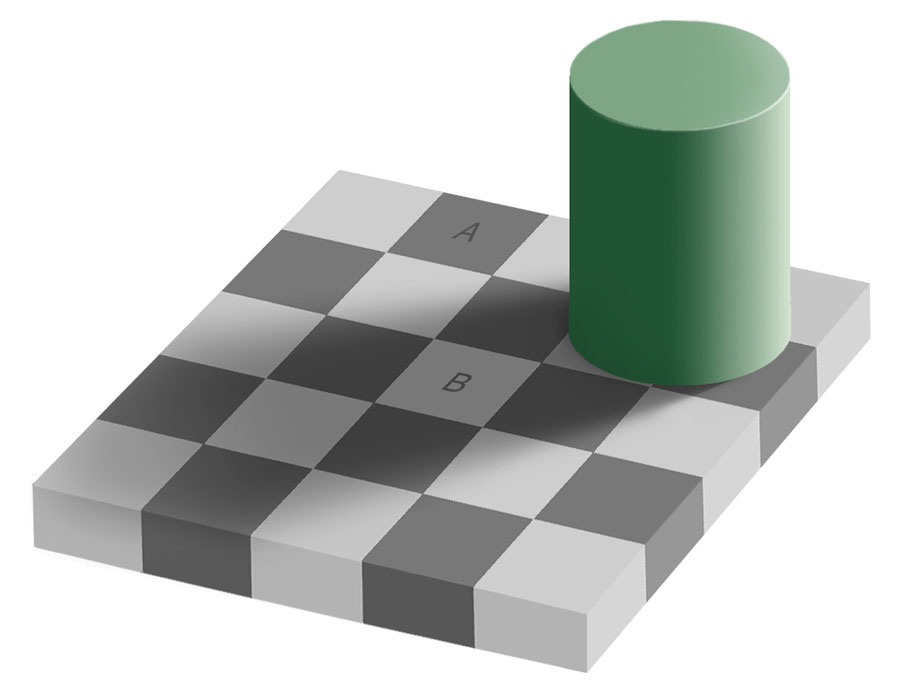
Look at this picture:
greyillusion_wikipedia.jpg

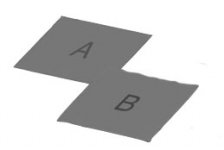
<span style="font-weight: bold">Explanation: </span>Are square A and B the same color? They are. Are too. To verify this, click here to see them connected. The above illusion, called the same color illusion, illustrates that purely human observations in science may be ambiguous or inaccurate. Even such a seemingly direct perception as relative color. Similar illusions exist on the sky, such as the size of the Moon near the horizon, or the apparent shapes of astronomical objects. The advent of automated, reproducible, measuring devices such as CCDs have made science in general and astronomy in particular less prone to, but not free of, human-biased illusions.

If even the connected squares can't convince you, try using photo shop to cut out pieces of each square and you will see that they are exactly the same.


Basil
 
They may be close, but not exact. I can detect a subtle change of the gray scale in the band connecting the two squares. It looks like it gets lighter from A to B...or is that still part of the illusion?

Edit: It's definitly part of the the illusion. I took the pragmatic approach, printed out the picture and then cut out squares A & B. Put them next to each other they are the same shade.
 
martx-5 said:
They may be close, but not exact. I can detect a subtle change of the gray scale in the band connecting the two squares. It looks like it gets lighter from A to B...or is that still part of the illusion?

They are exact. I have a program called HTML color 2k which allows you to point at any spot on your screen and it will show the HTML code of that spot. Both of those squares are exactly the same colors: Hex code: 787878

Also, I used Photo shop to cut out each of the two squares and placed them on a separate image, then overlapped the two. Now it is clear they are the same color.
 

Attachments

  • 18686.jpg
    18686.jpg
    13.8 KB · Views: 195
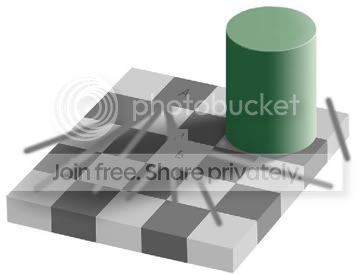
Very cool! the illusion extended even more into Tinsters "shopped" image! it looks as if the lines he drew change shades as they travel through the shadow. of course they don't but the eye makes you think they do.
Nice illustration.
 
Banjo said:
Very cool! the illusion extended even more into Tinsters "shopped" image! it looks as if the lines he drew change shades as they travel through the shadow. of course they don't but the eye makes you think they do.
Nice illustration.

No matter how hard I try I can't get my brain to see the same color on those squares when looking at the original image!
 
Basil, notice that I edited my post. Printing out the image and cutting the squares out and laying side by side showed they are exactly the same.

This kind of stuff is great... :cheers:
 
That, my friends, is the artists stock in trade...how else does one make a flat piece of paper look like 3D objects!! :thumbsup:
(It's all in the play of light and shadows!) :wink:
 
Basil said:
No matter how hard I try I can't get my brain to see the same color on those squares when looking at the original image!

That's the beauty of the human brain. We are able to detect what is really represented. Don't try to fight it. Also, remember, as the "white" squares in the shadow get darker, so do the "black" squares, so it's a relational thing and the human mind can cope with this very well and <span style="font-weight: bold">we</span> know what we are looking at.

It's like when I was heavy into photography (large format, B&W), if you wanted to take a picture of a white horse and a picture of a black horse, the light meter would register middle gray on both, because that's what they are designed to do. If you used those readings instead of zoning them, both horses would be rendered middle gray when printed. If there was no background in either picture to help the brain interpret what's going on, both horses would look gray and you wouldn't be able to tell the color.
 
&let's see - what could've been done to the Jag during the time you spent playing with squares....
 
This is the same phenomenon that makes black areas in a projected slide look black. When you project a slide on a screen, the white areas are lit up with ordinary white light, but the "black" areas simply have no light. In those areas, you're seeing just the screen background, which might look gray when the projector is off. But when the slide is projected, that same area looks black.

There are a lot of unexpected phenomena in human light perception. I was especially intrigued by a demonstration of this I once saw at the Exploratorium in San Francisco (several years ago, but it might still be there). You can take a black-and-white scene and reintroduce just a small part of the color information, and its colors appear almost normal. This principle was used in analog color TV, when it was recognized that the color information is a relatively small part of the information in a picture. This allowed fitting a color signal into the bandwidth that had previously been allocated for a BW TV signal.

Here's another one. Put a card of a particular color on the wall; call it Color A. Illuminate it with white light, and measure the intensity of the red, green and blue reflected from it. Now, put another card on the wall, of a different color, say Color B, and illuminate it with individual red, green, and blue lights. Adjust the RGB lights so that the amount of each color, reflected from the card, is the same as for the Color A card with white light. You'd expect it to appear, now, to be Color A, but it doesn't; it still looks like Color B! This phenomenon is called "color constancy," and no one really understands what does it. Something in your brain figures out what color you are looking at, in any light environment, even without any special information as to what the color really is. The idea that color simply consists of the amount of individual primary colors simply is not the whole story.
 
Dave's not here!
 
Thank you, what a timely post! We were talking in class today about making observations and recording what we see, hear, and smell. The kids were amazed when I took this picture and opened it in paint, cut out the center of the B square and dropped it into the A square to create a perfect match. Cool!!!
 
Back
Top