• Hey Guest!
    British Car Forum has been supporting enthusiasts for over 25 years by providing a great place to share our love for British cars. You can support our efforts by upgrading your membership for less than the dues of most car clubs. There are some perks with a member upgrade!

    **Upgrade Now**
    (PS: Upgraded members don't see this banner, nor will you see the Google ads that appear on the site.)
Tips
Tips

Painting inside of block with Glyptal-need advice

Patrick67BJ8

Obi Wan
Silver
Country flag
Offline
I'll be reassembling my engine within a couple of weeks and I never have used Glyptal and would like to hear from guys who have. The engine interior is real clean with no visible "oil, etc", spots on it. What should I used to clean the surface again before applying the Glyptal? I have the "brush-on" product from Eastwood.

I have read numerous web posted articles and although there is some negatives there is significantly a lot more positives.
Thanks,
 
What should I use to clean the surface again before applying the Glyptal? I have the "brush-on" product from Eastwood.

Be sure and have the block hot tanked befpre painting OK
 
Keoke said:
What should I use to clean the surface again before applying the Glyptal? I have the "brush-on" product from Eastwood.

Be sure and have the block hot tanked befpre painting OK
It was cleaned thoroughly by the machine shop and a oil type of coating applied to the bores.

You can't clean a block like we did 30 plus years ago. All passages are clean, core plugs installed by shop. The outside of the block still has paint on it but paint is thin and very oil/grease free I'll probably wire brush that.

My thoughts are to wipe down with lacquer thinner and/or mineral spirits.
 
What is the point of painting the engine with glyptal? It seems like the only place it would make a significant difference would be in the water passages where you can't paint anyway.
 
Lacquer thinner or Xylene, not paint thinner or mineral spirits. These will leave an oil residue, which will inhibit the coatings adhesion and lead to a failure.

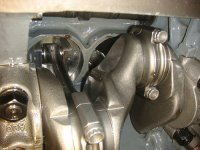
Here's what the inside of my race motor looked like after a couple seasons with the internal block coated.
 

Attachments

  • 28984.jpg
    28984.jpg
    131.7 KB · Views: 362
Lacquer thinner or Xylene, not paint thinner or mineral spirits. These will leave an oil residue, which will inhibit the coatings adhesion and lead to a failure.

Thank you Dougie: :iagree:
 
dougie said:
Lacquer thinner or Xylene, not paint thinner or mineral spirits. These will leave an oil residue, which will inhibit the coatings adhesion and lead to a failure.

Here's what the inside of my race motor looked like after a couple seasons with the internal block coated.
The can, after reading the fine print, says to "remove all grease and oil by washing surface with mineral spirits". My experience with mineral spirits puts me in agreement with you and using lacquer thinner(not paint thinner). Acetone is also a good cleaner too. It also says to paint with a "proper brush", but it doesn't tell me what a "proper brush" is. No telling what the paint store people will say if I ask for a proper brush to paint the inside of my engine block. Maybe some cheapies from the Harbor.

I have read web where some people use red oxide primer in a spray bomb and swear by it.

Dougie, Your inside engine paint/coating is better than some exterior restorations I've seen over the years. Why is it blue?

Thanks to "all" for input. I'm not going run right out to the garage today and paint, but maybe in a few days. If I decide to use the Glyptal, and I hate to waste money, I'll paint the engine and set it out in our Texas heat to bake.
 
Patrick67BJ8 said:
Randy Forbes said:
Mine was one of the negatives; NEVER AGAIN!
Can you go into more detail on "negative"?
Most of it was found at my 100 mile oil change interval for a new engine, clogging the oil filter. The rest was puddled in the oil pan.

I'm not green (in any former or current sense of the term) when it comes to paint preparation. The inside of that Healey block, the one that still resides in BN6L-942, was hot tanked, scrubbed with soap and water, dried with compressed air, and finally squirted down with aerosol brake parts cleaner (non-residue formula) and then coated with Glyptal electric motor insulating varnish__the red stuff.

Maybe the brake parts cleaner left trace elements behind that aren't considered to be residue; maybe I applied too thick of layers or didn't wait long enough between coats, but the $hit all fell off as if it was applied to wax-paper. It didn't come off in sheets, but more fragmented tiny pieces.

The oil pump pick up screen was mostly covered with it and you could wipe it out of the bottom of the pan as if it was aquarium gravel.

The whole point is to seal the casting's pores, allowing the oil to drain back faster and theoretically keeping the oil cleaner. You don't need Glyptal to accomplish that, as seen in Dougie's photo above.

Nowadays, since 1992 anyway, I use polymer coatings on the inside and outside of all the engines I build, but that's another story...

 
Back
Top