• Hey Guest!
    British Car Forum has been supporting enthusiasts for over 25 years by providing a great place to share our love for British cars. You can support our efforts by upgrading your membership for less than the dues of most car clubs. There are some perks with a member upgrade!

    **Upgrade Now**
    (PS: Upgraded members don't see this banner, nor will you see the Google ads that appear on the site.)
Tips
Tips

TR2/3/3A Oil plugs

CJD

Yoda
Country flag
Offline
Alright, next dumb question...

I've got the block as bare as it goes, with the exception of the oil gallery plugs. So, what's the deal with these things? How do you remove them, as they are just flat with nothing to grab. Then, what do you put in their place? The front oil plug will foul the front plate if not totally flat, and the rear looks like it may be very close to the flywheel.

I usually send the blocks off to be tanked, but that gets grunge in every crevace. I am tempted to just give it a good bath with carb cleaner and call it a day.

Is there an easy secret to these plugs?

Oh, and what about the crank "bung Holes"? Love that term!?! How do those go out and back in?
 
I would leave them in if they show no signs of leaking. Depending on what you dip the block into would decide if you need to replace them. To get them out I've had good luck cutting a groove into them and turning out with a screwdriver. They come in a stick of three or four plugs. After you screw the new one in you cut it off and then file, or grind flat.
 
Do NOT remove these plugs. They are threaded into the block, I just had my block tanked in the process of a rebuild and foolishly asked to have these replaced. They have to be drilled out, you get a threaded stick of plugs that you have to screw in and saw off.
 
Thanks guys...that explains a lot. I will leave them in, but that means I will not risk tanking the block. The grunge from a hundred other filthy projects would make its way into the galleries, and I see no way to clean it out without removing the plugs.

Is that large core plug on the back of the block similar?

Thanks again!
 
Roadster factory sells a stick of 3 aluminum plugs if you do decide to tank John. I know racers have used hex plugs instead , just need to put sealant on the threads.
 
I went through the same thought process you did John. I ended up leaving the end plugs in and pulled the 3 plugs down the side and the 1 by the distributor out and had the block degrease and washed out with hot water in this kinda big dishwasher deal at a machine shop. I really struggled about it because I thought the same thing. I am going to get all kinds of alien crap in there, but this block is one I have had under my work bench for 30 years and it had metal and whatever around it, so I figured it would not hurt. The shop did a good job and wanted me to use their “shake & Bake" system. These guys put blocks in and oven and bake them to 500 degrees and then blast them beads and clean them out with brushes and air and hot water, but I did not go that route. The shop is well respected and does many many engines with the shake and bake deal. They thought I was being too conservative by stopping the process after the big dishwasher, but the heating spooked me and so did the blasting after I heard feedback on this forum plus what I figured to be common sense. But I guess it is a brave new world and these younger guys use these short little pistons and whined the crap out of their engines after that process.

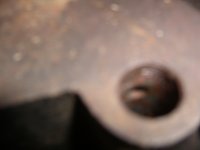
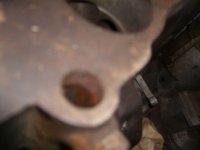
I have another block that I picked with the end plugs already out, but my camera is not very good. Anyway the threads seem like proprietary fine threads about a half inch deep.
 

Attachments

  • CIMG1481.JPG
    CIMG1481.JPG
    164.5 KB · Views: 119
  • CIMG1482.JPG
    CIMG1482.JPG
    163.3 KB · Views: 117
Thanks Steve, Randy. I was wondering what type thread these were...your picture answers that. I also went browsing on the TRF website. The plugs are not shown anywhere, but if I search plugs, they come up with a listing for them. At least they are really cheap!

Like most of this project, I'll vascilate until the end. I'm leaning towards the brush and carb cleaning route, but may change my mind and do it the right way.

Steve, I am with you about the cooking method. I remember when my machine guy got that set up about 10 years ago. He was pushing it too, but I passed back then. Mainly because of the heat.

Anyway, more to follow...

Oh, I did get the bolt repair kit to fix the stud crack. I'll post a thread on that later, as it's pretty cool!
 
John I would love to see the repair kit and how it works, please don't forget to post.
 
I feel like I took the middle path by just removing the side plugs and leaving the end plugs in (they did look good) because the end side plug is so close to the end and I did not see a big advantage to removing the very end. It looked like the oil galley would flush out fine with only the side plugs out plus the side plug allows access to the hole for the bearing oil to clean out. Moreover the inability to see if the end plugs were leaking after the front plate and trans are installed coupled with the idea I would be putting in place an aftermarket repair plug help me decide to leave well enough alone. I know one member had the original rear plug fail and that is a good argument for replacement.

Having said that if I did replace them, I would drill a hole and reverse thread tap it and turn them out with a bolt.
 
Alright, next dumb question...

I've got the block as bare as it goes, with the exception of the oil gallery plugs. So, what's the deal with these things? How do you remove them, as they are just flat with nothing to grab. Then, what do you put in their place? The front oil plug will foul the front plate if not totally flat, and the rear looks like it may be very close to the flywheel.

I usually send the blocks off to be tanked, but that gets grunge in every crevace. I am tempted to just give it a good bath with carb cleaner and call it a day.

Is there an easy secret to these plugs?

Oh, and what about the crank "bung Holes"? Love that term!?! How do those go out and back in?
John
Check out my experience w rear plug. I had to replace and used a Dremel-cut slot and biggest screwdriver in the drawer to remove.

https://www.britishcarforum.com/bcf...ngine-rebuild-questions)/page5&highlight=Plug

pat
 
That was very helpful, Pat. I think you swayed me to remove them to clean everything out properly. This motor has sat for 30 years, so I don't know the condition of the plugs...probably best to do it myself so I know it's done right.

Thanks again to all for the responses!
 
Removed the plugs this morning. The good news, they were never going to leak, as the factory glued them in solid. The bad news, I had to drill them out...and the glue is so good that I am down to just the aluminum inside the iron threads, but those still will not let go! I need to chase the threads with a tap.

So, what thread size are the oil plugs??
 
Will they separate some with heat or perhaps the heat help the glue let go? Maybe 0ne of those hand held soldering torches be careful of fumes if you go that route, they might ignite and blast out somewhere.
 
It's been one of those days. We think alike, Steve...I pulled out the torch and started heating the threads to melt out the aluminum. I quickly realized that if it melted, it would blob down into the oil gallery. I had second thoughts.

I then packed everything up to take to my machinist. I figured since he is tanking it, I'd just ask for the "good stuff" that would eat out the aluminum. Got to is shop...He's on vacation all this week. Bummer.

I've got all the aluminum routed out right down so the iron threads are showing. Whatever the factory used to seal these plugs, it is very strong stuff, as the aluminum curly left inside the iron threads will not budge. If I had the right tap, that would take care of it once and for all. It does not look like pipe thread. If I knew the thread I could get the tap and clean it right out. What thread is the big question??

On another note...

While I pondered the oil plug situation, I decided to tackle the throttle rod that crosses over the top of the engine. The drift pin that holds the rod coupled to the gas pedal had been wallowed, redrilled, wallowed and drilled again. As always, I welded up all the holes so I could redrill a fresh hole for the drift pin. I've done this same operation a hundred times. 10 minutes. Not today.

I started re-drilling the throttle rod, and everything I put in the hole either broke or rounded the cutting edge right off. I sharpened bits so many times that I set the grinder right next to the drill press. It had to be 50 sharpenings, and 4 broken drill bits. I tried re-heating the rod and slow cooling to aneal it. No change...everything that went in the hole broke or spun. I finally realized that I was so focused on drilling that last 3/16" that I had wasted 3 hours on one hole!!

I finally woke up, went to the hardware and got a fresh steel rod to drill.

All I can figure is that the rod had been drilled and wallowed so many times by the PO, that he had broken the tip of a carbide drill bit inside one of the holes. I apparently welded the broken carbide bit inside the rod, and then proceded to run into it with all my attempts to re-drill the hole.

Tomorrow's another day...
 
John
Really sorry to hear about the oil plug challenges. Mine spun out with a dremel-cut slot and a big screwdriver. But that was after the block had been hot tanked. Best of luck getting this remedied. You'll ultimately be happy with the replacement plugs as you'll never have to pull the tranny and flywheel and chase that elusive back-of-block leak (imitates a rear seal leak very effectively).

Pat
 
Just a final update. I found a 3/4 X 16 tap at the local hardware and feed supply. It was too large for Lowes, Ace, etc. Spun the tap through the holes and the old aluminum from the plugs cleaned right out. The block is at the shop getting tanked and the new plugs are on their way from TRF.

Thanks again to all for the help!
 
Back
Top