Hey Guest!

 Hey - did you know if you click on the title of a thread it will take you to the first unread post since you last visited that thread?
 but were afraid to ask:
  STOP!! Never post your email address in open forums. Bots can "harvest" your email! If you must share your email use a Private Message or use the
  smilie in place of the real @
 Pretty Please - add it to our Events forum(s) and add to the calendar! >>

RAC68
Darth Vader
Offline
Greg/Kurt,
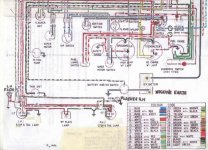
My response was made to provide a little clarity regarding comments on the horn circuit and it is always left at your discursion. Basic circuitry requires that a “+” and “-“ be present for power to flow. Although you may not appreciate the ground side of the circuit, if a horn short is experienced and located within the steering column, it WILL create a power flow with the side of the column and likely sound the horn…at least for a brief time. However, since a sporadic connection will have been made with the shaft acting as the ground, it is also probable that a substantial amount of current will pass before the 35 amp fuse is blown. Additionally, this short can be the source of sparks and other that could affect the closely packed wires of your signal circuit. As a result, you can loose more than just the horn.
Since this issue does not hold a critical potential, you may choose to address this possibility in the future or never. As stated, my objective was only to clarify the circuit as it is always your choice to determine your actions.
Good luck,
Ray (64BJ8P1)
My response was made to provide a little clarity regarding comments on the horn circuit and it is always left at your discursion. Basic circuitry requires that a “+” and “-“ be present for power to flow. Although you may not appreciate the ground side of the circuit, if a horn short is experienced and located within the steering column, it WILL create a power flow with the side of the column and likely sound the horn…at least for a brief time. However, since a sporadic connection will have been made with the shaft acting as the ground, it is also probable that a substantial amount of current will pass before the 35 amp fuse is blown. Additionally, this short can be the source of sparks and other that could affect the closely packed wires of your signal circuit. As a result, you can loose more than just the horn.
Since this issue does not hold a critical potential, you may choose to address this possibility in the future or never. As stated, my objective was only to clarify the circuit as it is always your choice to determine your actions.
Good luck,
Ray (64BJ8P1)