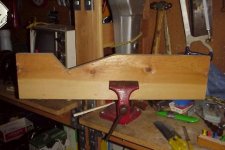
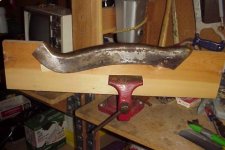
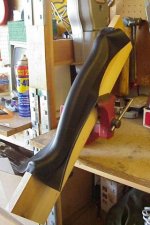
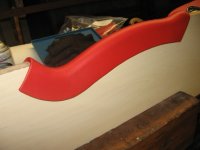
I used contact cement but I didn't glue it all at once.
Here's what I did:
First I laid the capping on the vinyl upside down and rolled it to mark each edge on the back of the vinyl with a sharpie. Then I brushed cement to the marked lines and on the capping. Wait longer until the glue has dried to tack. Then marry the two pieces, smoothing as you go but avoid too much stretching and leaving edges without glue until the next day.
Next day, revisit yesterdays work, then apply glue to the edges and enough under the capping to wrap the vinyl, cut v-shaped reliefs around the curves as you think you need. Smooth around the edge and hold/clamp as needed. Squeeze clamps and wood scraps work well. Too much squeeze pressure may flatten the vinyl grain. It will be apparent that yesterdays work helps holding today's work where you want it.
Then one more day when everything is set, flip the capping over and trim any excess inside the capping with a razor knife leaving enough material underneath but not too much which can cause fitment issues.
I've also used 3M vinyl spray for other things but plain contact cement worked just fine. For the amount needed, brush cap bottles work really well and you use a new fresh one each time.

 Hi Guest!

 Hey - did you know if you click on the title of a thread it will take you to the first unread post since you last visited that thread?
 but were afraid to ask:
  STOP!! Never post your email address in open forums. Bots can "harvest" your email! If you must share your email use a Private Message or use the
  smilie in place of the real @
 Pretty Please - add it to our Events forum(s) and add to the calendar! >>