• Hey Guest!
    British Car Forum has been supporting enthusiasts for over 25 years by providing a great place to share our love for British cars. You can support our efforts by upgrading your membership for less than the dues of most car clubs. There are some perks with a member upgrade!

    **Upgrade Now**
    (PS: Upgraded members don't see this banner, nor will you see the Google ads that appear on the site.)
Tips
Tips

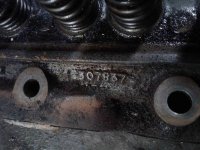
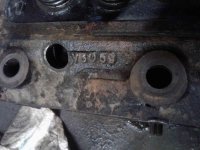
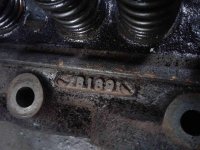
TR6 Do these numbers on the head mean anything?

Got_All_4

Luke Skywalker
Country flag
Offline
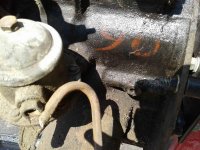
This head is off my 69 TR6 and is going to the machine shop Wednesday for a valve job and what else. I measured the head tonight and it's 3.462" so should be near 8.75:1 compression. Do the numbers cast into the head have any particular meaning? Also on the side of the block there is a 90 written in red on the left side. Don't know the significance of that ether.

I think I want to shave a bit off the head to increase HP a little. Don't want to go radical as I want to keep it more reliable and just a bit more kick in the pants. Going to send the cam and lifters into Delta Camshaft for inspection, repairs and maybe a light regrind too.
 

Attachments

  • 69TR6block2.jpg
    69TR6block2.jpg
    89.7 KB · Views: 158
  • 1969headnumbers1.jpg
    1969headnumbers1.jpg
    73.8 KB · Views: 162
  • 1969headnumbers2.jpg
    1969headnumbers2.jpg
    60.6 KB · Views: 157
  • 1969headnumbers3.jpg
    1969headnumbers3.jpg
    74.9 KB · Views: 160
Since no one has yet replied, I'll give you what little I know. The casting numbers probably have a meaning for the manufacturer, to link the product to the blueprint for example, but little else. Meaningful production numbers, part numbers, dates, etc are almost hallways stamped in and not cast.
As for the painted mark, Standard Triumph used the same looking paint on earlier engines to identify what they would be used for, "TR3" or "TR4" for example. Perhaps someone knows what they painted on the TR6.
Tom
 
Thanks for the reply! Yes I've see the TR3 painted on a block but a 90 is bewildering as to it's meaning. I thought may compression ratio? My head is 3.462" and charts say 8.75:1. If you look at one of the pics the numbers look like they are on a plate with screws on each end.
 
Again I have no idea of what the 90 meant but one guess would be some sort of inventory control like the "TR3" painted on those engines. Part of that could have been compression ratio. Seems like someone here would know.
The tags that were screwed on were common also. They were screwed to the pattern before it went to the mold. At least it looks to me like that's what it is. Hard to tell for sure from a picture. This allowed for the number change in the mold with only a rather simple tag change on the pattern. Here is an example from a Chevy head where the screwed on tag is the date: https://grantorinosport.org/bubbaf250/parts/pics03.html
The head or other part would later the go to the machine shop for finishing, so I doubt it reflects any later process like surfacing that would affect compression ratio.
But all this is guessing on my part from what little I know about the casting and forging processes. "Too little knowledge is more dangerous than no knowledge".
Tom
 
The B189 is the date it was cast. Feb 18 1969 ...or 59 or 79. You can see the little screw marks where the date is screwed into the master mold right before the sand mold is cast. Like Tom says, the other numbers are the casting number for the master. The second casting number means it was a 2 part mold, so the second part of the mold also had it's specific identifying number.

For high-dollar collector cars people have actually tracked the casting numbers. For, like say a mid-year Corvette, you can check every casting number on the car for originality with the dates and options the car was built with. I don't know if anyone has assembled a database for our British cars...but I would imagine the Brits may check the casting numbers before forking out $70k for a lowly TR3/4. When you refer to a car as "numbers matching", it normally includes the casting numbers...not just the date codes.
 
Commission plate says it was built January 1 1969. So it's ether a different head or something screwie. Anyway going to rebuild the engine this winter and need to know what I'm dealing with. Just going to do a light performance increase say 125HP.
 
For high-dollar collector cars people have actually tracked the casting numbers. For, like say a mid-year Corvette, you can check every casting number on the car for originality with the dates and options the car was built with. I don't know if anyone has assembled a database for our British cars...but I would imagine the Brits may check the casting numbers before forking out $70k for a lowly TR3/4. When you refer to a car as "numbers matching", it normally includes the casting numbers...not just the date codes.

It would be interesting to know if such data exists. Not really high dollar but this sort of thing would be really useful for cars like Mini "Coopers" that have been cloned to death.
Tom
 
Back
Top