Hey Guest!


Offline
I started my teaching career in a large school district in south Texas in the early 1970s, Our school district had a percentage quota on the number of "mexican kids" that could go to school, even tho' the population was 95% Mexican-American.
A few months into my first year, one of my students, José Luís, told me that his parents wanted me to come for dinner.
On the appointed day, I drove to their house. As I approached, I saw the entire area was comprised of tiny wooden houses, 2 or 3 rooms, up on concrete blocks. All the houses were owned by the local planters, who rented them to the migrant worker families for the growing season. I parked my car (a 1971 Ford Pinto!) and the family came out to greet me.
The front room of the house had a big table, several folding metal chairs, and a bare light bulb hanging from the ceiling.
The meal was fantastic. Fresh garden vegetables, oranges and lemons, home-made tortillas de masa and de maíz, beer and sodas, and the highlight: tamales con cabrito (roast goat). José served as translator, and I learned how much his parents valued education, which would enable the children to "escape" the manual labor of the migrant life.
Next day at school, I told some fellow teachers about the dinner, and how I felt "honored" to be invited to my student's home. Another teacher said "You were *really* honored. Those people can only afford to buy meat once or twice a month."
That's when the "culture shock" really hit me. So I worked my durndest to help all my kids, who really valued the education that many other students never took seriously. And José eventually earned a full scholarship to the Juilliard School of Music in NYC.
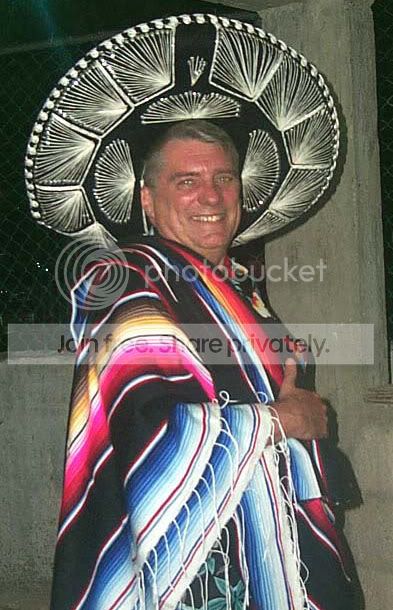
So in honor of José, I'm personally celebrating Cinco de Mayo.
A tu memoria, José.
Tom

A few months into my first year, one of my students, José Luís, told me that his parents wanted me to come for dinner.
On the appointed day, I drove to their house. As I approached, I saw the entire area was comprised of tiny wooden houses, 2 or 3 rooms, up on concrete blocks. All the houses were owned by the local planters, who rented them to the migrant worker families for the growing season. I parked my car (a 1971 Ford Pinto!) and the family came out to greet me.
The front room of the house had a big table, several folding metal chairs, and a bare light bulb hanging from the ceiling.
The meal was fantastic. Fresh garden vegetables, oranges and lemons, home-made tortillas de masa and de maíz, beer and sodas, and the highlight: tamales con cabrito (roast goat). José served as translator, and I learned how much his parents valued education, which would enable the children to "escape" the manual labor of the migrant life.
Next day at school, I told some fellow teachers about the dinner, and how I felt "honored" to be invited to my student's home. Another teacher said "You were *really* honored. Those people can only afford to buy meat once or twice a month."
That's when the "culture shock" really hit me. So I worked my durndest to help all my kids, who really valued the education that many other students never took seriously. And José eventually earned a full scholarship to the Juilliard School of Music in NYC.
So in honor of José, I'm personally celebrating Cinco de Mayo.
A tu memoria, José.
Tom