

-
 Hey Guest!
British Car Forum has been supporting enthusiasts for over 25 years by providing a great place to share our love for British cars. You can support our efforts by upgrading your membership for less than the dues of most car clubs. There are some perks with a member upgrade!**Upgrade Now**
(PS: Upgraded members don't see this banner, nor will you see the Google ads that appear on the site.)
You are using an out of date browser. It may not display this or other websites correctly.
You should upgrade or use an alternative browser.
You should upgrade or use an alternative browser.
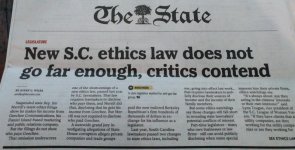
Another case of what came first: "chicken or the egg"
- Thread starter GTP1960
- Start date


Offline
hmmm - if a thoughtful human writes a law, then the law obviously comes *after* the human's thought. But that's certainly not meant to say that acts committed which *follow* the law are not thoughtful! Of course, if M-theory branes (string membranes) collide, the resulting "prime events" could produce many conflicting human thoughts and conflicting human laws, in conflicting yet contemporaneous universes.
Tossing this into the Kantian Ethics debate - paraphrasing Singer (1983) - we have to admit that deontological ethical theory, developed as a result of Enlightenment rationalism, is based on the view that the only intrinsically good thing is a good will. An action can only be good if its maxim – the principle behind it – pays duty to the moral law. Central to Kant's construction of the moral law is the categorical imperative, which acts on all people, regardless of their interests or desires.
In other words, what's good for General Motors, is good for the USA!
(right?)
:banana:
Tossing this into the Kantian Ethics debate - paraphrasing Singer (1983) - we have to admit that deontological ethical theory, developed as a result of Enlightenment rationalism, is based on the view that the only intrinsically good thing is a good will. An action can only be good if its maxim – the principle behind it – pays duty to the moral law. Central to Kant's construction of the moral law is the categorical imperative, which acts on all people, regardless of their interests or desires.
In other words, what's good for General Motors, is good for the USA!
(right?)
:banana:
OP

GTP1960
Jedi Knight
Offline
In other words, what's good for General Motors, is good for the USA!
.....ok the last part I get!
(but, is GM the chicken or the egg?)

Offline
hmmm - if a thoughtful human writes a law, then the law obviously comes *after* the human's thought. But that's certainly not meant to say that acts committed which *follow* the law are not thoughtful! Of course, if M-theory branes (string membranes) collide, the resulting "prime events" could produce many conflicting human thoughts and conflicting human laws, in conflicting yet contemporaneous universes.
Tossing this into the Kantian Ethics debate - paraphrasing Singer (1983) - we have to admit that deontological ethical theory, developed as a result of Enlightenment rationalism, is based on the view that the only intrinsically good thing is a good will. An action can only be good if its maxim – the principle behind it – pays duty to the moral law. Central to Kant's construction of the moral law is the categorical imperative, which acts on all people, regardless of their interests or desires.
In other words, what's good for General Motors, is good for the USA!
(right?)
:banana:
I think we should stamp out verisimilitude!!

Offline
I think we should stamp out verisimilitude!!
Absolutely! (and some folks are much better at that than others!)
Offline
That is hysterical! I'd never seen that episode.
And I could never argue with what he says.
Never.
(wow - do I miss 1960s TV)
It's on Netflix! So is Andy Griffith and others.
